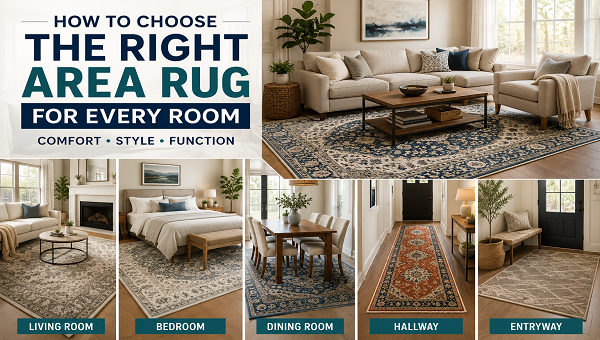
Sam’s Flooring helps homeowners find area rugs that add comfort, color, warmth, and function to their living spaces. A rug may seem like a small decorating detail, yet it can completely change how a room looks and feels. For example, the right rug can connect furniture, soften hard flooring, reduce noise, and make the space feel more welcoming. Therefore, choosing the right rug requires more than selecting a pattern that looks attractive. Size, material, texture, and placement all play an important role in the final result. In addition, each room has different needs based on foot traffic, furniture layout, and daily use. A soft rug may work well in a bedroom, while a durable and easy-to-clean option may be better for a living room, hallway, or dining area. With careful planning, an area rug can improve both the comfort and overall design of the home.
Start With the Purpose of the Room
The right room area rugs should match how each space is used every day. For example, a living room rug should handle regular foot traffic, while a bedroom rug should feel soft under bare feet. As a result, the room’s purpose should guide the material, size, texture, and design. Before choosing a rug, think about who uses the space. A busy family room may need a stain-resistant and easy-to-clean surface. Meanwhile, a quiet guest room can support a softer or more delicate rug. This approach helps homeowners select a rug that looks good and performs well.
Key Takeaways
- Choose the rug size according to the furniture layout, not only the room size.
- Match the rug material to the amount of traffic, moisture, and daily use.
- Use color and pattern to connect the rug with furniture, walls, and flooring.
Measure the Room Before Shopping
Correct measurements help prevent one of the most common rug-buying mistakes. A rug that is too small may make the furniture look disconnected. On the other hand, a rug that is too large can cover too much flooring and make the room feel crowded. First, measure the length and width of the space. Next, note the location of doors, vents, fireplaces, and fixed furniture. Then, use painter’s tape to mark the planned rug size on the floor. This simple test shows how much space the rug will cover. Moreover, it helps homeowners see whether chairs, tables, and walkways will fit comfortably. In most rooms, leaving some visible flooring around the rug creates a balanced border. However, the correct border size depends on the room and furniture layout. Therefore, homeowners should focus on visual balance rather than following one strict rule.
Choose the Right Living Room Rug
The living room often contains the largest furniture pieces in the home. Therefore, the area rug should connect the sofa, chairs, and coffee table into one clear seating area. For a large living room, all furniture legs may sit on the rug. This layout creates a full and complete appearance. However, it requires a large rug that reaches beyond each furniture piece. In a medium-sized living room, the front legs of the sofa and chairs can rest on the rug. Meanwhile, the back legs remain on the flooring. This popular layout connects the seating without requiring an oversized rug. For a small living room, the rug may sit under the coffee table with a small gap between the rug and sofa. However, the rug should still look wide enough to relate to the main furniture. A living room rug should also support regular activity. Therefore, low-pile or medium-pile materials often work well. They allow chairs and tables to sit evenly while remaining easy to vacuum.
Find the Best Rug for the Dining Room
A dining room rug should extend beyond the table and chairs. Otherwise, chair legs may catch on the rug edge whenever someone sits down or stands up. As a general guide, the rug should provide enough space for the chairs to remain on the rug when pulled away from the table. Therefore, measuring the table alone is not enough. Homeowners should measure the full seating area. Shape also matters. A rectangular rug usually works well under a rectangular table. Likewise, a round rug may support a round dining table. However, mixing shapes can also work when the room design feels balanced. Dining rooms face food spills, drink stains, and frequent chair movement. As a result, flat-weave and low-pile rugs are often practical choices. They collect fewer crumbs and make chair movement easier. In addition, busy patterns can hide small marks between cleanings. Therefore, homes with children or frequent guests may benefit from a rug with several colors or a detailed design.
Add Comfort With a Bedroom Rug
A bedroom rug should create warmth and softness. Since people often step onto the floor with bare feet, texture becomes especially important. One common layout places a large rug under the bed. The rug usually begins before or near the nightstands and extends beyond both sides and the foot of the bed. As a result, the bed feels grounded within the room.
Another option places the rug under the lower part of the bed. This layout uses less rug material while still adding softness near the foot and sides. Smaller runner rugs can also sit beside the bed. These rugs work well in narrow bedrooms or rooms where homeowners want to show more of the existing flooring. Soft wool, synthetic blends, and medium-pile rugs can all work in bedrooms. However, very thick rugs may make doors difficult to open. Therefore, door clearance should be checked before making a final selection.
Select a Practical Rug for the Entryway
An entryway rug creates the first impression of the home. More importantly, it helps collect dirt and moisture from shoes. Because entryways receive heavy foot traffic, the rug should have a strong and easy-to-clean material. Low-pile rugs usually work better than thick rugs because they fit under doors and trap less debris. A rug pad can reduce slipping, especially on smooth flooring. In addition, it can keep the rug from moving when people enter or leave the home. The color should also match the space’s daily use. Light solid rugs may show dirt quickly. Therefore, medium or dark colors with small patterns often work better near exterior doors. Many homes in the United States experience changing weather throughout the year. As a result, entryway rugs may face rain, dust, mud, or snow depending on the region. Choosing a durable rug can help protect the flooring beneath it.
Use Runners in Hallways
Hallways are often narrow and long, which makes runner rugs a natural choice. A runner can add color and softness without covering the entire floor. Before selecting a runner, measure both the hallway width and length. The rug should leave a visible strip of flooring on each side. Therefore, it should not press directly against the walls. A hallway runner should also stay flat. Raised corners can create a tripping risk, especially in busy areas. For this reason, a non-slip pad or rug tape may be useful. Because hallways receive frequent traffic, durable materials work best. Wool, polypropylene, nylon, and flat-weave rugs often provide dependable performance. Patterns can also improve the hallway’s appearance. For example, a lengthwise design can make the space feel longer. Meanwhile, a bold pattern can turn a plain hallway into a stronger design feature.
Choose Kitchen Rugs Carefully
Kitchen rugs can reduce pressure on the feet and add warmth near hard flooring. However, they also face spills, crumbs, grease, and regular cleaning. Runner rugs often work well between cabinets and islands. Smaller rugs can also sit near the sink or food preparation area. The rug should have a low pile so it does not interfere with cabinet doors or create a tripping problem. Moreover, washable materials can make maintenance easier. A kitchen rug should not slide when someone turns or carries hot food. Therefore, a non-slip backing or separate rug pad is important. For homes in the United States, kitchen layouts range from small galley spaces to large open rooms. As a result, the rug size should match the walkway instead of following a single standard measurement.
Consider Moisture in Bathrooms
Bathroom rugs need to handle water and humidity. Therefore, material selection matters more than appearance alone. A washable rug usually works best near a bathtub, shower, or vanity. Cotton and synthetic materials can dry more quickly than many thick natural fibers. The rug should also have a non-slip backing. Wet bathroom floors can become slippery, so the rug must stay in place. Although plush rugs feel comfortable, they may hold moisture for longer periods. As a result, they need regular washing and complete drying. Homeowners should avoid placing valuable handmade rugs in areas that receive frequent water exposure. Instead, those rugs can be used in dry dressing areas or larger bathrooms away from the shower.
Match Rug Material to Daily Use
Each rug material offers different benefits. Therefore, homeowners should compare comfort, durability, cleaning needs, and price before choosing.
Wool Rugs
Wool feels soft, looks rich, and handles regular use well. In addition, it can keep its appearance for many years with proper care. However, wool rugs may cost more than synthetic options. They may also require professional cleaning for deep stains.
Cotton Rugs
Cotton rugs feel light and casual. Moreover, many smaller cotton rugs can be washed at home. However, cotton may wear faster in busy areas. Therefore, it often works better in bedrooms, kitchens, or low-traffic spaces.
Synthetic Rugs
Synthetic rugs include materials such as nylon, polyester, and polypropylene. These options often resist stains and cost less than natural fibers. As a result, synthetic rugs work well in family rooms, playrooms, entryways, and homes with pets.
Natural-Fiber Rugs
Jute, sisal, and seagrass rugs add texture and a natural appearance. They work well in dry living rooms, dining areas, and home offices. However, moisture can damage some natural fibers. Therefore, they may not suit bathrooms, wet entryways, or areas with frequent spills.
Pick a Color That Supports the Room
A rug can either become the main design feature or support the other items in the room. If the furniture and walls use neutral colors, a bold rug can add energy. For example, deep blue, rust, green, or red may create a strong focal point. On the other hand, a neutral rug can balance colorful furniture, artwork, or curtains. Beige, gray, cream, and soft brown often create a calmer background. Homeowners should also consider the floor color. A rug that matches the floor too closely may disappear. In contrast, a slight difference in shade can help the rug stand out. Lighting can change how colors appear. Therefore, rug samples should be viewed during both daytime and evening hours when possible.
Use Patterns to Improve the Space
Patterns can hide stains, add movement, and connect several colors within the room. Small patterns often work well in busy areas because they hide crumbs and minor marks. Meanwhile, large patterns can create a strong visual feature in open spaces. A patterned rug should share at least one or two colors with the furniture, walls, or accessories. As a result, the design feels connected instead of random. However, several strong patterns in one room may compete with each other. Therefore, a bold rug often works best with simpler curtains and furniture. Traditional patterns can add warmth, while geometric designs create a modern look. Likewise, striped rugs can make a narrow room appear wider or longer depending on the direction of the lines.
Choose the Right Rug Pile
Rug pile refers to the height and thickness of the fibers. Low-pile rugs have short fibers and a flatter surface. Therefore, they work well in dining rooms, hallways, offices, and other busy spaces. Medium-pile rugs offer more softness while remaining fairly easy to clean. As a result, they suit living rooms and bedrooms. High-pile or shag rugs feel very soft. However, they collect more dust and can be harder to vacuum. Therefore, they usually work best in quiet rooms with less traffic. Households with pets should also consider claws, shedding, and cleaning. Looped rugs may catch on pet nails, while thick rugs can hold more fur.
Use a Rug Pad for Safety and Comfort
A rug pad sits between the rug and flooring. Although it remains hidden, it provides several useful benefits. First, it helps keep the rug from sliding. Second, it adds cushioning underfoot. Third, it can reduce wear by limiting movement against the floor. A pad may also protect hardwood, tile, or laminate from rough rug backing. However, homeowners should choose a pad that suits the flooring material. The pad should remain slightly smaller than the rug. Otherwise, it may show around the edges. In homes with children or older adults, slip resistance becomes especially important. Therefore, a quality pad can improve both comfort and safety.
Compare Rugs in Person Before Buying
Photos provide a useful starting point, but they do not always show the true color, thickness, or texture of a rug. Therefore, seeing and touching a rug in person can make the decision easier. Homeowners who shop for area rugs can compare materials, patterns, and sizes while considering the needs of each room. In addition, viewing several options together can help reveal which colors and textures work best with the home. Bringing paint samples, fabric pieces, flooring photos, or cabinet colors can also help. As a result, homeowners can compare the rug with the room’s existing finishes before making a purchase.
Avoid Common Area Rug Mistakes
A few simple mistakes can reduce the rug’s impact. Choosing a rug that is too small is one of the most common problems. Therefore, homeowners should measure the furniture layout before shopping. Ignoring cleaning needs can also create problems. A delicate rug may look beautiful, but it may not suit a dining room or busy entryway. In addition, placing a rug without a pad can lead to sliding and uneven wear. The pad should be selected at the same time as the rug. Finally, homeowners should avoid selecting a rug based only on current trends. A design should also match the home, lifestyle, and long-term preferences.
Final Thoughts
The right area rug can make a room feel warmer, more comfortable, and more complete. However, the best choice depends on much more than color. Homeowners should consider room size, furniture placement, foot traffic, cleaning needs, and rug material. Therefore, measuring and planning before shopping can prevent costly mistakes. Different rooms need different solutions. A soft bedroom rug may not work in a busy hallway, while a durable entryway rug may feel too rough beside a bed. For homeowners in the United States, area rugs offer a flexible way to update a room without replacing furniture or flooring. With the right size, material, color, and rug pad, every room can gain both comfort and style.
