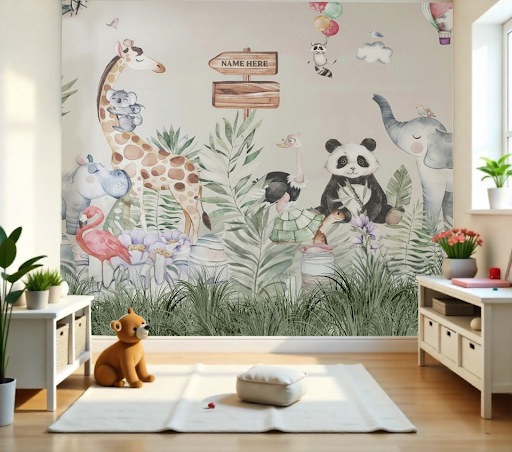
Living room walls establish much of a home’s visual character, influencing how furniture, lighting, flooring, and decorative accents are perceived. A carefully selected wall covering can introduce depth, soften a large surface, or create a defined focal point without requiring extensive structural changes. The choice becomes especially important when the room combines contemporary furnishings with architectural details, because scale, color, texture, and pattern must work together rather than compete.
For homeowners seeking a distinctive finish, a designer living room wallpaper can provide an opportunity to coordinate the wall with the intended atmosphere of the space. Options can range from restrained geometric patterns and subtle textures to botanical scenes, artistic compositions, architectural motifs, and immersive 3D murals. The most effective selection considers the room’s proportions, natural and artificial lighting, furniture palette, and the visual role assigned to the wall. A thoughtful choice can also influence how spacious, intimate, refined, or energetic the setting feels.
Choosing Wallpaper According to Room Proportions
Room dimensions should guide pattern selection before a design is finalized. Large-scale artwork can create a strong focal point across a broad feature wall, while smaller motifs may suit compact areas where visual balance is important. Vertical arrangements can emphasize height, whereas horizontal compositions may visually broaden a wall. These effects depend on the complete interior rather than the wallpaper alone.
Ceiling height, furniture placement, window positions, and wall interruptions also affect how a design will appear after installation. A mural that looks balanced in a sample can feel different when reproduced across an entire surface. Accurate measurements and careful planning help preserve the intended composition, particularly when the design contains architectural details, repeated elements, or a central focal image.
Useful selection considerations include:
- Wall dimensions and ceiling height
- Natural light entering the room
- Sofa, flooring, and furniture colors
- Existing architectural features
- Intended focal point
- Pattern scale and visual density
Matching Colors, Textures, and Interior Styles
Color selection has a direct relationship with the atmosphere of a living room. Neutral shades can create a calm foundation, while richer tones can introduce depth and visual drama. Soft beige, white, vanilla, gray, and related tones can complement understated interiors, whereas botanical greens, darker backgrounds, or stronger contrasts can create a more pronounced feature wall. The surrounding palette should determine whether the wall covering blends into the room or becomes its principal visual statement.
Texture can add another layer of dimension without relying on highly elaborate imagery. Textured collections can introduce depth across a broad surface, while floral, tropical, artistic, abstract, wood, and stone-inspired themes can support different design directions. A considered combination of color and surface character can help connect the wall with upholstery, flooring, lighting, and decorative accessories. It can also establish continuity between individual design elements without making the room feel visually crowded.
A cohesive living room palette can consider:
- Warm or cool undertones within existing furnishings
- Contrast between the wall and seating
- Texture alongside smooth surfaces
- Repetition of accent colors
- Visual balance between decorative and neutral elements
Customization and Feature Wall Planning
Customization becomes useful when a standard pattern does not provide the desired scale, composition, or subject. A homeowner can begin with an existing reference image or an original idea and develop a wall treatment around the dimensions of the intended surface. This approach is particularly relevant for feature walls where the design needs to align precisely with furniture, lighting, or architectural elements.
Custom 3D wallpaper can also create an illusion of depth through high-definition imagery, textured landscapes, artistic scenes, or architectural compositions. Designs can be printed to fit specific wall measurements, helping reduce awkward gaps and unwanted cut-offs. When the composition is planned around the room rather than selected independently, the finished surface can appear more integrated with the overall interior. This makes customization useful for interiors requiring a distinctive visual identity without compromising spatial balance.
Customization may be particularly suitable when:
- A specific image or concept needs to be reproduced
- A design requires adjustment to a particular wall size
- A feature wall needs a defined visual focal point
- Pattern scale must be changed for better proportion
- An interior requires a more individualized treatment
Installation Quality and Material Considerations
Even a well-selected design depends on accurate preparation and professional installation. Wall condition, measurements, alignment, adhesive application, and finishing can influence how seamlessly the final surface appears. Uneven placement or incorrect sizing can disrupt patterns and reduce the visual impact of a carefully chosen design, making installation an important part of the overall result. Proper preparation can also help the finished covering maintain its intended appearance across the complete wall.
Material considerations also matter for residential interiors. Durable wallpaper can support long-term use, while non-toxic adhesive options can be relevant for households concerned about indoor environments. A complete service approach that includes a home assessment, sample selection, precise measurement, quotation, delivery, and fitting can simplify the process and reduce uncertainty before installation begins. Professional handling is especially valuable when large murals or detailed patterns require careful alignment.
A practical installation process can involve:
- Assessing wall condition before application
- Confirming exact measurements
- Reviewing samples under the room’s lighting
- Checking pattern alignment and scale
- Using suitable adhesive and installation methods
- Inspecting the completed surface for a seamless finish
Final Thoughts
What can turn an ordinary living room wall into a defining element of the interior? The right combination of proportion, color, texture, customization, material quality, and professional fitting can make the wall feel intentional rather than simply decorated. Wallchic UAE provides wallpaper solutions across Dubai, including floral, tropical, textured, plain, artistic, abstract, wood and stone, kids, and 3D custom design collections. Its service includes a free home visit, free measurements, free installation, more than 500 samples, non-toxic glue, and customization based on an individual’s preferred pattern or scale. For homeowners considering custom living room wallpaper in UAE, the combination of personalized design development and installation support can provide a practical route toward a distinctive, carefully finished living environment.