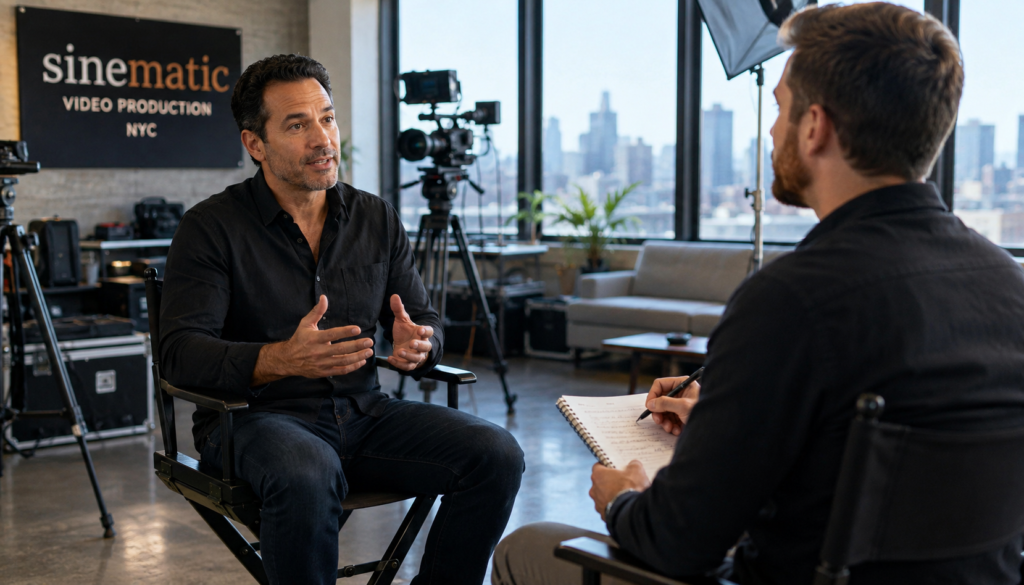
Video production looks glamorous from the outside. There are cameras, locations, creative ideas and finished commercials that may run for only a few seconds. Behind those final seconds, though, is a much bigger operation.
To understand what it actually takes to run a production company, we looked at the experience and working approach of Sinematic, a New York-based video production company with more than 15 years in the industry. The company works with brands and agencies across commercial production, from creative development and casting through filming and post-production.
Starting a Video Production Company
Q: What does it really take to build a production company rather than simply work as a filmmaker?
A: The creative work is only one part of the business. A production company has to bring together creative development, people, locations, equipment, schedules, budgets and post-production, while keeping the client’s objectives in focus.
That becomes especially important as projects get larger. Sinematic’s production services cover everything from scripting and storyboards to casting, location scouting, production design, filming, editing, visual effects, sound and final mastering.
The bigger the production, the more coordination is required behind the scenes. The camera may be the most visible part of the process, but it is only one piece of the production.
Clients, Expectations and Pricing
Q: What’s one of the biggest challenges when working with clients?
A: Getting everyone aligned before production begins can make a huge difference. The creative idea needs to match the campaign objective, deliverables, schedule and available budget.
Sinematic’s approach starts by establishing those goals and agreeing on the creative direction, production calendar and budget before filming begins. The company also says it provides an itemized breakdown of production costs so clients can adjust individual elements to stay within their budget.
That kind of planning matters because a production budget isn’t simply the cost of hiring a camera crew for a day. It can include casting, locations, permits, production design, wardrobe, equipment, crew, editing, sound, visual effects and many other elements.
Q: So how should clients think about pricing?
A: Start with what the video needs to accomplish. A simple production and a large commercial campaign shouldn’t be approached in exactly the same way.
For a brand looking for a commercial video production company, the useful question isn’t simply, “How much does a video cost?” It’s, “What does this particular production need to achieve its goal?”
Sinematic says its pricing depends on factors including the number of actors, locations, wardrobe requirements and cameras, and that clients can revise budget items to reach a target production budget.
That makes pricing part of the creative conversation, rather than something that happens separately from it.
What Clients Often Don’t See
Q: What do people commonly underestimate about professional video production?
A: The amount of preparation involved.
A commercial may only last 30 seconds, but those 30 seconds can require days or weeks of work before and after the shoot. Scripts need to be developed, locations found, talent cast, sets prepared and production logistics organized. After filming, the footage still has to be edited, colored, mixed and, when required, enhanced with graphics or visual effects.
New York adds another layer. Location-based productions may require permits and coordination with city agencies depending on the shoot. The NYC Mayor’s Office of Media and Entertainment provides film permits and production services for filming on public property throughout the city’s five boroughs.
Sinematic says its New York team handles location scouting and permits and has experience filming across the city’s different neighborhoods and boroughs.
Equipment and Production Decisions
Q: How should a production company think about equipment?
A: Equipment should support the production rather than become the production.
Sinematic uses professional cinema cameras, including ARRI Alexa and RED Komodo systems, along with professional lighting and other production equipment. It also works with specialized resources such as virtual production and LED-wall environments when a project calls for them.
The important business decision is knowing what a project actually requires. Buying equipment simply because it is impressive can tie up money without improving the final result. The better approach is to match the equipment, crew and production method to the creative requirements and budget.
Lessons From 15+ Years in Production
Q: After more than 15 years in the industry, what becomes most important as a production company grows?
A: Consistency.
A production company has to deliver creatively, but it also has to be dependable. Clients need to know that the team understands their objectives, communicates clearly, manages the production and can handle changes without losing sight of the final result.
That becomes even more important when projects involve multiple locations, larger crews or complicated post-production. Sinematic says it has produced work across industries including technology, finance, pharmaceutical, food and beverage, beauty, automotive, travel and nonprofit organizations. The company also reports more than 35 awards, including Telly Awards recognizing cinematography, editing and film direction.
Q: What would you tell someone thinking about starting a video production company today?
A: Don’t focus only on becoming better at making videos. Learn the business around the videos.
Creative skills are essential, but so are communication, budgeting, scheduling, client management and production planning. A great filmmaker can make a great film. A successful production company has to make the entire process work for the client.
Final Thoughts
Running a video production company is about much more than cameras and creative ideas. It is a combination of storytelling, business planning, people, technology and client relationships.
Sinematic’s experience in New York illustrates that the strongest productions begin long before the cameras roll. When the creative vision, budget, logistics and production team are aligned from the beginning, the finished video has a much better chance of achieving what it was created to do.