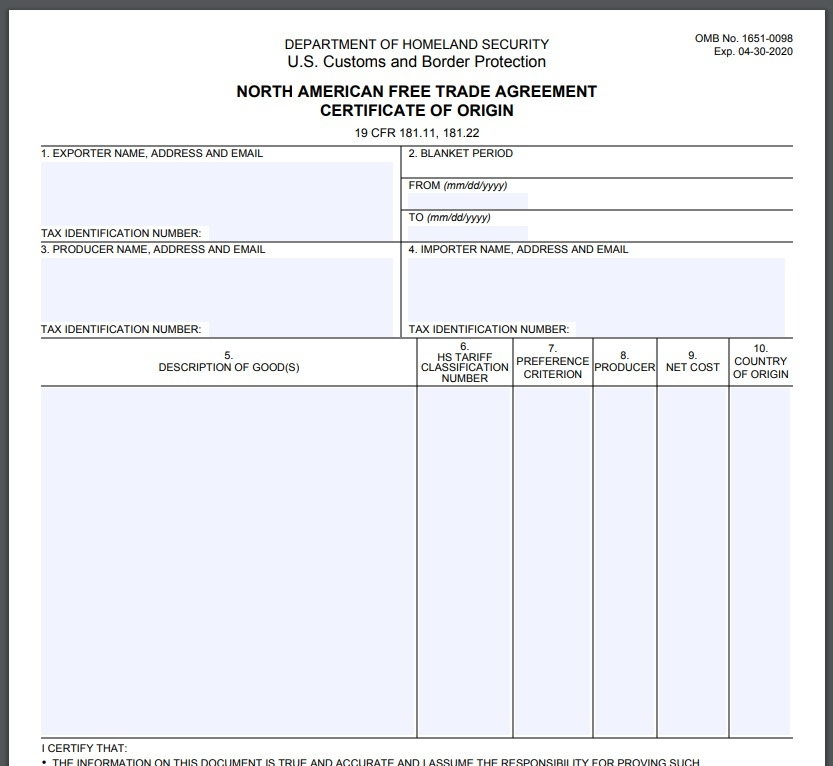
Anyone who regularly imports or exports goods across North American borders eventually meets paperwork that proves where products come from. For many years, that role belonged to the NAFTA cert, a document commonly used to claim preferential tariff treatment. Trade rules have since changed, but the underlying idea remains relevant for modern shipments. This practical article explains what origin documentation does, how the framework evolved, which key information it typically contains, and how businesses can keep records organized for audits.
What Origin Certification Does and Why It Matters for Trade
A Certificate Documents Where Goods Were Made for Tariff Purposes
A certificate of origin states that goods qualify as originating in a trade partner under agreed rules. Importers use it to request reduced or zero tariffs. Historically, a NAFTA cert supported claims for qualifying goods moving among the United States, Canada and Mexico, helping reduce costs for eligible products.
Origin Rules Depend on How and Where a Product Was Made
Products qualify based on where materials originate, where they are produced, and whether manufacturing changes the tariff classification. Rules differ by product category, so claims must match the specific criteria. Check each rule before claiming. A simple label such as made in one country does not automatically satisfy the requirements for duty-free treatment.
Accurate Paperwork Helps Prevent Delays, Penalties and Unexpected Duty Bills
Errors in descriptions, tariff codes,s or signatures can lead customs authorities to reject a claim. Importers may then owe duties plus possible penalties. Small mistakes can become costly quickly. Understanding how a NAFTA cert worked, and how current documentation differs, helps companies avoid repeating outdated practices.
How the USMCA Replaced NAFTA and What Changed for Importers
The USMCA Took Effect in 2020 and Replaced the Earlier Agreement
The United States-Mexico-Canada Agreement took effect on July 1, 2020, replacing NAFTA. As a result, a NAFTA certificate is no longer used for new preferential claims. Shipments now rely on USMCA origin rules and certification instead, though older records may still matter for past entries.
Certification Can Come From the Importer, Exporter or Producer
Under the newer framework, there is no mandatory official form. A certification may be written in any format as long as it contains the required data elements. It can be completed by the importer, exporter, or producer, depending on who has the necessary information about the goods.
Common Data Elements Include Product Description, Classification,n and Origin Criterion
Typical elements include the certifier, exporter, producer, er and importer details, a description of the goods, the tariff classification, the origin criterion, ion and a signature with a date. Even though the old NAFTA cert form has retired, the same careful attention to product details remains essential. Always confirm current requirements with a customs broker.
Record Keeping and Supplier Practices That Support Smooth Cross-Border Shipments
Keep Supporting Documents Organized and Easily Accessible for Several Years
Customs authorities may review claims long after goods clear the border. Store invoices, supplier declarations, bills of materials, and certifications together, and retain them for the required period. A well-organized file also clarifies how a former NAFTA cert was used if older entries are ever examined.
Clear Supplier Communication Keeps Origin Information Complete, Accurate and Current
Manufacturers rely on suppliers to confirm where components originate. Ask suppliers for written declarations and update them when sourcing changes. Keep copies of every reply. Regular communication prevents surprises and gives importers the evidence they need to support preferential claims when questions arise.
Professional Guidance Helps Companies Interpret Changing Trade Rules Correctly and Confidently
Customs brokers and trade advisors can confirm which rules apply to specific products and routes. Tariffs and regulations change, so verify details before filing. Treat any older guide as historical context, then rely on official government sources for the current requirements.
Conclusion
Origin documentation connects product details to the tariff treatment a shipment can receive. Knowing how the earlier certificate worked, and how the USMCA changed the process, helps businesses avoid outdated assumptions. Knowledge base articles from suppliers such as Machine Parts Toolbox can also help buyers of packaging equipment parts understand cross-border purchasing questions. Verify requirements, maintain organized records, and keep communication open with every partner in the supply chain.