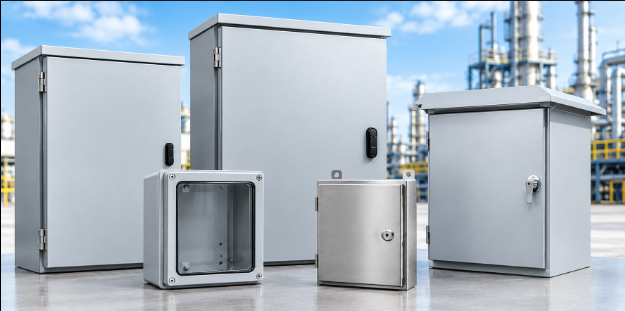
Electrical enclosures protect wiring, terminals, controls, and other components from environmental conditions that could affect safety and equipment performance. Choosing the right enclosure requires more than considering its size or material. Its environmental rating must match the conditions where it will be installed. Understanding NEMA box ratings helps electrical professionals determine how well an enclosure can protect against dust, water, corrosion, oil, and other hazards.
What Are NEMA Box Ratings?
NEMA ratings classify electrical enclosures according to the environmental hazards they are designed to protect against. The National Electrical Manufacturers Association’s enclosure classifications address factors such as access to hazardous parts, solid particles, water, corrosion, oil, coolant, and other conditions depending on the enclosure type.
Unlike a simple indication of whether a box is waterproof, NEMA box ratings describe a broader set of tested environmental protections.
Common NEMA Ratings and Their Applications
NEMA Type 3 and 3R enclosures provide protection for outdoor applications, including exposure to rain, sleet, snow, and windblown dust. Type 4 provides protection against water splashing and hose-directed water, making it appropriate for environments where more substantial water exposure is expected.
Type 4X adds corrosion resistance to the environmental protection provided by Type 4. This distinction can be particularly important in locations exposed to corrosive substances or atmospheres.
NEMA Type 6 provides protection against hose-directed water and occasional temporary submersion, while Type 12 and Type 13 are commonly associated with indoor industrial environments where protection against dust, dirt, dripping water, oil, and coolant may be required.
How Do You Choose the Correct NEMA Rating?
The installation environment should be the starting point when evaluating NEMA box ratings. Consider whether the enclosure will be installed indoors or outdoors and identify the specific hazards it may encounter.
For outdoor installations, rain, snow, sleet, and windblown particles may influence the required enclosure type. Industrial facilities may introduce additional concerns such as oil, coolant, dust, or corrosive materials. Washdown areas require an enclosure designed for significant water exposure rather than one intended only for ordinary indoor conditions.
NEMA Ratings vs. IP Ratings
NEMA and IP ratings are related but should not be treated as interchangeable systems. IP ratings, defined under IEC 60529, primarily classify protection against solid objects and water ingress. NEMA enclosure types consider these factors while also addressing additional environmental hazards, including corrosion, oil, coolant, and icing for applicable enclosure types.
NEMA provides comparison tables showing how certain NEMA enclosure types correspond to or exceed particular IP classifications. However, NEMA specifically notes that an IP classification should not simply be converted into a NEMA type because the two systems evaluate environmental protection differently.
Understanding nema box ratings makes it easier to match an electrical enclosure to the conditions it will face during operation. Indoor electrical systems may require a different level of protection than outdoor, industrial, washdown, or corrosive environments.
Why Material and Construction Matter
The NEMA rating is only one consideration when selecting an enclosure. Material, wall construction, door or cover design, sealing components, mounting arrangements, and overall dimensions can affect whether the enclosure is suitable for a particular installation.
For example, corrosion-prone environments may require a material and enclosure construction capable of maintaining protection over time. Industrial installations may also require sufficient internal space for wiring, terminals, connectors, and heat-producing components.
Conclusion
The selection process should consider water exposure, solid particles, corrosion, oil, coolant, installation location, enclosure material, and the equipment that must fit inside. For applications involving an electrical junction box, choosing an enclosure based on the actual environmental requirements can provide more dependable protection than selecting a box based solely on size or appearance. NEMA ratings provide a structured way to evaluate those requirements and make a more informed enclosure selection.