Finding the right masterbatch manufacturers is not always straightforward. There are hundreds of suppliers in the market, but not all of them understand the specific demands of engineering-grade polymers like POM. POM Masterbatch developed for Polyoxymethylene (acetal) resins — is one of the more technically demanding formulations out there. And if you get the wrong supplier, you will know it very quickly. The parts start warping. The color bleeds. The mechanical properties drop.
This article breaks down everything you need to know about POM Masterbatch, how to evaluate masterbatch manufacturers, and what separates a capable supplier from a mediocre one.
What Is POM Masterbatch and Why Does It Matter?
POM — short for Polyoxymethylene — is a high-performance engineering thermoplastic. It is known for its tight dimensional tolerance, low friction, and excellent wear resistance. Industries that rely on precision gears, conveyor belts, snap-fit connectors, and automotive components use POM extensively.
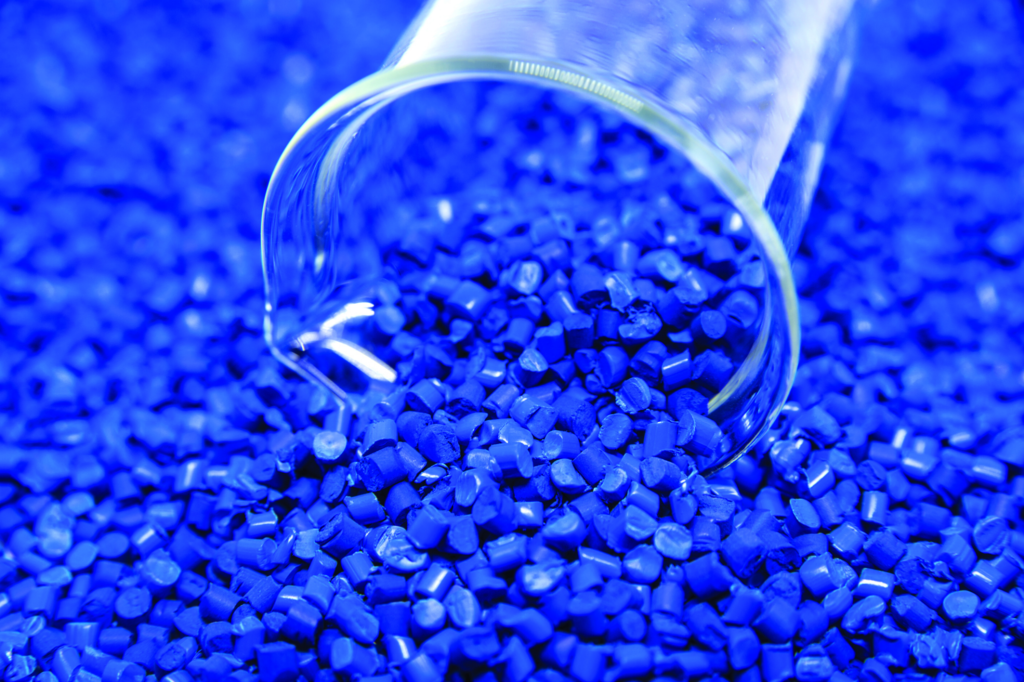
POM Masterbatch is a concentrated mixture of pigments, UV stabilisers, or functional additives pre-dispersed in a POM-compatible carrier resin. The masterbatch is then blended with the base resin during moulding or extrusion to achieve consistent colour or performance modification.
The challenge? POM is thermally sensitive. Degradation can start above 230°C, and poor additive dispersion causes colour inconsistencies and surface defects. This is why the choice of masterbatch manufacturers matters so much in this segment.
Key Properties of High-Quality POM Masterbatch
Not all masterbatches are made equal. A reliable POM Masterbatch should deliver thermal stability up to at least 220–230°C without discolouration, excellent dispersion without agglomeration, full compatibility with natural POM grades (both homopolymer and copolymer), no compromise to mechanical strength or surface finish, and consistent batch-to-batch colour accuracy with Delta E below 1.0 for precision applications.
These are the benchmarks serious masterbatch manufacturers use to qualify their POM formulations before releasing them commercially.
How to Evaluate Masterbatch Manufacturers for POM Applications
Here is what you should actually check when shortlisting a supplier:
1. Carrier Resin Compatibility
The carrier resin in a masterbatch must match — or at least be compatible with — your base POM. A mismatch causes phase separation, streaks, and loss of mechanical integrity. Ask manufacturers directly which POM grades their masterbatch is designed for.
2. Lab and Testing Infrastructure
Can they show you a Certificate of Analysis? Can they run melt flow index checks, thermal stability tests, and spectrophotometric colour matching in-house? Serious masterbatch manufacturers invest in this infrastructure because it is the only way to guarantee consistency.
3. Minimum Order Quantity and Customisation Flexibility
Many large manufacturers only work with high volumes. If you are running a smaller operation or a niche application, look for suppliers who offer custom compounding and lower MOQs without dropping quality standards.
4. Track Record in Engineering Plastics
A company that primarily handles commodity plastics like LDPE may not have the expertise to handle POM. Look for masterbatch manufacturers with demonstrated experience in engineering polymers — PEEK, PA, POM, and similar materials.
POM Masterbatch vs. Dry Colour Mixing — A Comparison
| Parameter | POM Masterbatch | Dry Colour Mixing |
| Dispersion Quality | Excellent (pre-dispersed) | Variable (depends on mixing) |
| Batch Consistency | High | Moderate to Low |
| Thermal Risk | Low (controlled formulation) | Higher (raw pigment exposure) |
| Cost per Kg | Slightly higher | Lower upfront |
| Suitable for Precision Parts | Yes | Not recommended |
| Ease of Processing | Easy — just blend and mould | Requires controlled premixing |
Common Mistakes When Buying POM Masterbatch
- Choosing based only on price — the cheapest masterbatch rarely meets engineering-grade requirements
- Not requesting a technical data sheet or material compatibility statement
- Assuming a colour masterbatch made for polypropylene will work in POM — it will not
- Skipping trial runs before full-scale production
- Working with masterbatch manufacturers who have no quality certifications like ISO 9001
Best Practices for Using POM Masterbatch in Production
Even a high-quality masterbatch can underperform if used incorrectly. Dry the masterbatch before processing — POM-based formulations absorb moisture. Pre-drying at 80–100°C for 2–4 hours is standard. Keep the let-down ratio between 2–5% unless specifically recommended otherwise by the supplier. And always run a purge cycle before switching colours to avoid contamination.
Melt temperature should stay within the recommended window. Exceeding it even briefly can cause formaldehyde evolution — both a health hazard and a sign of resin degradation.
FAQs
Q1. What is the standard let-down ratio for POM Masterbatch?
The typical let-down ratio is 2–5%, meaning 2 to 5 parts masterbatch per 100 parts base resin. Your supplier should confirm the exact ratio based on the pigment loading and application.
Q2. Can POM Masterbatch be used for both homopolymer and copolymer POM?
Most quality masterbatch manufacturers formulate versions for both. However, always confirm compatibility, as homopolymer POM degrades faster at high temperatures compared to copolymer grades.
Q3. How do I check dispersion quality before full production?
Ask for moulded plaque samples. Run them under magnification and check for agglomerates or streaks. Most reputable suppliers will provide this as part of their trial kit.
Q4. Are there UV-stabilised POM Masterbatches available?
Yes. UV-stabilised POM Masterbatches are formulated for outdoor applications where the component is exposed to sunlight. These include HALS and UV absorbers specifically selected for compatibility with POM chemistry.
Q5. What certifications should masterbatch manufacturers hold?
Look for ISO 9001:2015 as a baseline. For food-contact or medical-grade applications, additional certifications or compliance with FDA/EU regulations will be required.
Q6. How does pigment loading affect the final part properties?
Higher pigment loading can impact impact strength and surface finish. A well-formulated POM Masterbatch keeps pigment loading optimised so it does not compromise the base resin’s mechanical performance.
Conclusion
POM Masterbatch is not a commodity product. It demands technical expertise, the right carrier resin, and suppliers who understand engineering plastics from the inside out. When you are evaluating masterbatch manufacturers, go beyond the price list. Ask the technical questions. Request trials. Check certifications. The extra diligence upfront will save you from costly production failures down the line.
Ready to work with masterbatch manufacturers who understand POM applications? Connect with a certified supplier today and request a free technical consultation and sample trial.