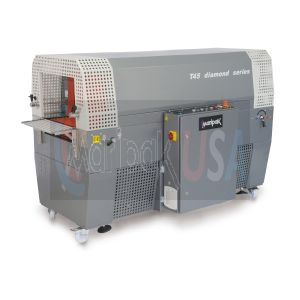
Heat-shrink packaging is widely used to protect products, group items together, and create a secure outer covering. A shrink tunnel plays an important role in this process by applying controlled heat to shrinkable film after it has been placed around a product. As the film passes through the heated chamber, it contracts around the packaged item, helping create a more uniform finish. Understanding how this equipment works, what affects its performance, and which factors matter during selection can help packaging operations make informed equipment decisions.
What Is a Heat Shrink Tunnel?
A heat shrink tunnel is a packaging machine that uses controlled heat to activate shrink film around products. It is commonly integrated into a packaging line after a sealing machine has enclosed the product in shrink film.
The packaged item enters the heated chamber through a conveyor system. As it moves through the tunnel, heat causes the film to contract. Once the process is complete, the film conforms more closely to the shape of the product or package.
The objective is not simply to apply heat. Temperature control, product movement, film characteristics, and tunnel configuration all influence how consistently the film shrinks.
How Does the Shrink Process Work?
The shrink tunnel when a product is enclosed in an appropriate shrink film. A sealing system typically creates the initial film enclosure before the package enters the tunnel.
Inside the chamber, controlled heat causes the film to shrink. Conveyor movement determines how long the package remains exposed to the heated environment. The combination of temperature and dwell time must suit the film and product being processed.
If conditions are not properly matched, the packaging may not shrink evenly. Excessive heat or exposure can also affect certain products or films. For this reason, packaging equipment must be selected and configured according to the requirements of the application.
Why Temperature Control Matters
Temperature consistency is an important consideration in heat-shrink packaging. Different films respond to heat in different ways, and packaging lines may process products with varying dimensions and characteristics.
Maintaining controlled heat throughout the tunnel helps provide more predictable shrink performance. Uneven temperatures can contribute to inconsistent results, particularly when packages move through different areas of the chamber.
Modern tunnel systems may incorporate controls designed to help operators manage heating conditions more precisely. The appropriate settings still depend on the specific film, product dimensions, conveyor speed, and overall packaging setup.
Factors That Affect Shrink Performance
Several variables can influence the finished package.
Film Type
Shrink films have different characteristics and processing requirements. The type and thickness of the film can affect how much heat is required and how the material responds during the shrinking process.
Product Size and Shape
Large, irregular, or unusually shaped products can require different processing conditions than smaller uniform packages. Product dimensions should therefore be considered when determining tunnel capacity and configuration.
Conveyor Speed
The speed at which products travel through the tunnel affects their exposure time. Faster movement reduces heat exposure, while slower movement increases it. Conveyor speed should be coordinated with the film and temperature settings.
Tunnel Configuration
Heat tunnels are available in different configurations and sizes. Single-chamber, extended-length, and double-chamber designs can accommodate different production requirements. The appropriate configuration depends on factors such as product dimensions, packaging speed, and available floor space.
Choosing the Right Tunnel for a Packaging Line
Equipment selection should begin with the requirements of the complete packaging process rather than focusing on the tunnel alone. Sealer speed, product dimensions, film type, conveyor requirements, and expected production volume all need to be considered together.
For example, a packaging operation processing smaller products at a particular speed may require different tunnel characteristics than one handling larger packages or higher production demands.
The Diamond Tunnel Series demonstrates how tunnel configurations can vary across applications. Its product range includes regular single-chamber, extended-length single-chamber, and double-chamber options, with different tunnel models available for varying requirements.
Integrating a Heat Tunnel With Other Equipment
A heat tunnel typically functions as part of a broader packaging system. The tunnel may be paired with sealing equipment and an infeed conveyor so products move through the process in a coordinated sequence.
According to the product information for the Diamond Series, system estimates depend on sealer speeds, product size, and film type when the tunnel is combined with compatible sealing equipment and infeed systems.
This highlights why equipment should be evaluated as an integrated packaging line. A tunnel that appears suitable based only on its dimensions may not provide the expected results if its operating conditions do not match the rest of the system.
Maintenance and Consistent Operation
Regular maintenance supports reliable packaging performance. Operators should follow the equipment manufacturer’s maintenance recommendations and inspect components that experience regular use.
Keeping the tunnel clean can also help maintain consistent operation. Packaging environments may produce film residue, dust, or other material that can accumulate around equipment components.
Operators should also monitor finished packages for changes in shrink quality. Wrinkling, loose film, uneven shrinking, or other changes may indicate that operating conditions need to be reviewed.
Conclusion
Heat-shrink packaging depends on more than simply exposing film to high temperatures. Consistent results require appropriate film selection, controlled heat, suitable belt conveyor speed, compatible sealing equipment, configuration that matches the application. Understanding these factors can help packaging operations select equipment more effectively and maintain predictable results over time. A properly configured system can support organized packaging processes while accommodation different product sizes, film types, and production requirements.