Introduction
Base metals are an essential part of modern life. They are used in buildings, vehicles, power systems, electronics, communication networks, and many other products we use every day. Metals such as copper, zinc, nickel, lead, and aluminum help industries operate efficiently and support economic growth worldwide.
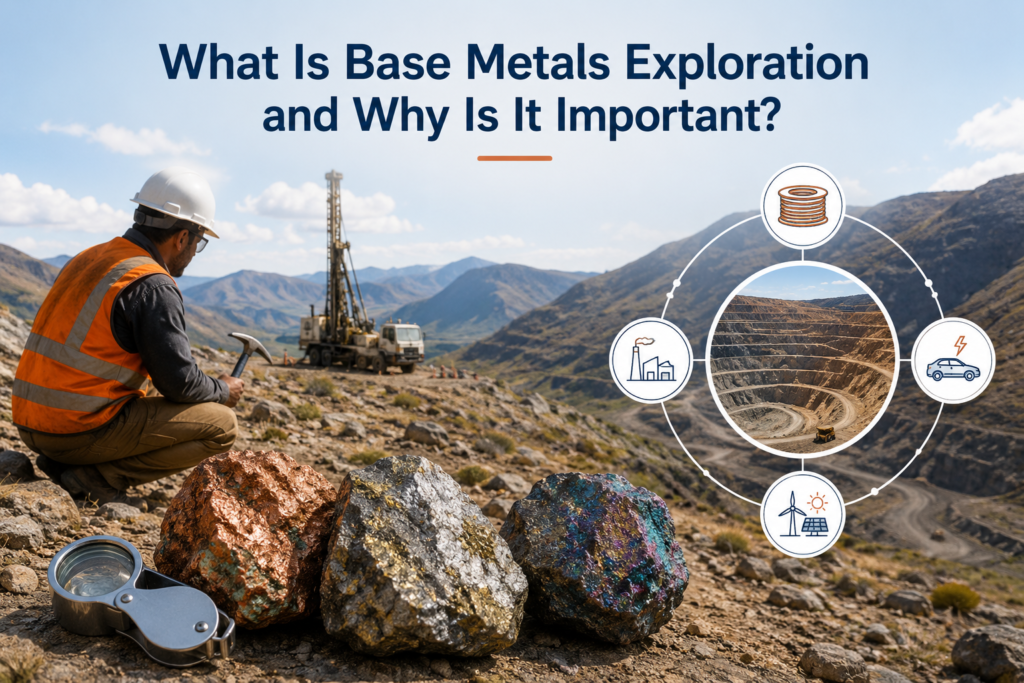
Before these metals can be mined and supplied to industries, they must first be found beneath the Earth’s surface. This process is known as base metals exploration. It involves studying the land, collecting geological information, and using advanced technology to locate metal deposits that may be suitable for mining.
As industries continue to grow and the demand for raw materials increases, the importance of discovering new mineral resources becomes even greater. This is one reason why base metals exploration in Brisbane and other resource-rich regions continues to receive significant attention.
What Are Base Metals?
Base metals are common industrial metals used in a wide range of manufacturing and construction activities. Unlike precious metals, which are mainly valued for their rarity, base metals are valued because they are needed in large quantities for practical applications.
Some of the most commonly used base metals include:
- Copper, used in electrical wiring and renewable energy systems
- Zinc, used to protect steel from rust and corrosion
- Nickel, used in stainless steel and battery production
- Lead, used in batteries and industrial equipment
- Aluminum, used in transportation, packaging, and construction
These metals support many industries and are important for economic development and technological progress.
What Is Base Metals Exploration?
Base metals exploration is the process of searching for underground deposits of valuable industrial metals. The goal is to identify areas where enough metal exists to make mining economically possible.
Geologists and exploration teams study the geology of an area and collect different types of information to understand what may lie beneath the surface. They use scientific methods and modern technology to locate mineral-rich zones and determine whether they are worth developing into mining projects.
The exploration process often takes several years and involves careful planning, testing, and analysis before any mining activity can begin.
Why Is Base Metals Exploration Important?
Base metals exploration is important because it helps ensure a steady supply of raw materials for industries around the world. Without ongoing exploration, existing mineral resources would eventually become depleted.
Exploration also supports economic growth by creating jobs, attracting investment, and contributing to regional development. The discovery of new mineral deposits can lead to long-term mining operations that provide benefits to local communities and national economies.
As the world moves toward cleaner energy technologies and increased infrastructure development, demand for metals continues to rise. Exploration helps meet these future needs by identifying new sources of important resources.
Main Stages of Base Metals Exploration
The exploration process follows several important stages. Each stage helps reduce uncertainty and improve understanding of a potential mineral deposit.
Geological Research
The first step is studying existing geological information about a region. Geologists review maps, historical records, and previous exploration reports to identify areas with mineral potential.
Field Surveys
Once a promising area is identified, exploration teams conduct field investigations. They examine rock formations, geological structures, and surface conditions to gather more detailed information.
Sample Collection and Analysis
Soil, rock, and sediment samples are collected and tested in laboratories. These tests help identify areas where metal concentrations are higher than normal.
Geophysical Investigations
Specialized equipment is used to measure underground characteristics such as magnetism, density, and electrical conductivity. These surveys help locate hidden mineral deposits without digging into the ground.
Drilling Programs
Drilling is one of the most important stages of exploration. Core samples taken from underground provide direct evidence about the presence, quality, and size of a mineral deposit.
Resource Assessment
If drilling results are positive, specialists estimate the amount of metal contained within the deposit. This information helps determine whether the project could support future mining operations.
Common Base Metals and Their Uses
| Base Metal | Main Uses | Importance |
| Copper | Electrical wiring, renewable energy systems | Essential for electricity transmission |
| Zinc | Galvanizing steel, construction materials | Protects metal from corrosion |
| Nickel | Stainless steel, batteries | Important for manufacturing and energy storage |
| Lead | Batteries, industrial equipment | Widely used in energy storage systems |
| Aluminum | Transportation, packaging, and construction | Lightweight and durable material |
Technologies Used in Modern Exploration
Technology has significantly improved the way mineral exploration is conducted. Modern tools allow exploration teams to gather more accurate information while reducing costs and environmental impacts.
Satellite imagery helps identify geological features across large areas. Geographic Information Systems (GIS) organize and analyze exploration data efficiently. Advanced computer software creates three-dimensional models of underground structures, allowing geologists to better understand potential mineral deposits.
Artificial intelligence and data analysis tools are also becoming more common in exploration projects. These technologies help process large amounts of information and identify patterns that may indicate mineral-rich zones.
Benefits of Base Metals Exploration
Base metals exploration offers several important benefits for industries, communities, and economies.
- Supports the long-term supply of essential industrial metals
- Creates employment opportunities in technical and support roles
- Encourages investment and economic development
- Provides valuable geological information for future projects
- Helps meet growing demand from renewable energy and manufacturing sectors
These benefits make exploration an important part of resource development and economic planning.
Environmental Responsibility in Exploration
Modern exploration programs place strong emphasis on environmental protection. Exploration companies are expected to follow regulations and minimize their impact on surrounding ecosystems.
Environmental studies are often conducted before exploration activities begin. These studies help identify sensitive areas and guide responsible planning.
Many modern exploration techniques are less disruptive than older methods. Careful site management, rehabilitation programs, and environmental monitoring help reduce impacts on land, water, and wildlife.
Responsible exploration practices ensure that resource development can occur while protecting natural environments.
Base Metals Exploration in Brisbane
The growing focus on base metals exploration in Brisbane reflects the increasing need for reliable mineral resources. Exploration activities in the region help improve understanding of local geology and identify areas with potential for future resource development.
Exploration teams working on base metals exploration in Brisbane use a combination of geological mapping, sampling programs, geophysical surveys, and drilling activities to assess mineral potential. These efforts contribute to resource planning and support industries that depend on a stable supply of metals.
As demand for copper, nickel, zinc, and other industrial metals continues to grow, exploration activities in the region are expected to remain important for future development.
Challenges in Base Metals Exploration
Although exploration can lead to valuable discoveries, it is not without challenges.
Finding mineral deposits is a complex process that requires significant time, expertise, and investment. Many exploration projects do not result in commercial discoveries. Deposits may be located deep underground, making them difficult to identify and evaluate.
Changes in metal prices, environmental requirements, and technical conditions can also affect exploration projects. Despite these challenges, ongoing improvements in technology continue to increase the chances of success.
The Future of Base Metals Exploration
The future of base metals exploration looks promising. Growing demand for electric vehicles, renewable energy systems, energy storage technologies, and infrastructure projects is increasing the need for industrial metals.
Exploration companies are adopting new technologies that improve efficiency and reduce environmental impacts. Artificial intelligence, advanced data analysis, and improved surveying techniques are expected to play an even greater role in future discoveries.
As global demand for metals continues to rise, exploration will remain a key activity in securing the resources needed for economic and technological growth.
Final Words
Base metals exploration is the process of finding and evaluating underground deposits of valuable industrial metals such as copper, zinc, nickel, lead, and aluminum. It is a vital step in ensuring a reliable supply of the materials needed for construction, manufacturing, transportation, and energy production.
The importance of exploration goes beyond mining. It supports economic growth, job creation, resource security, and technological progress. As industries continue to evolve and demand for metals increases, exploration will remain essential for meeting future resource needs.
The continued development of base metals exploration in Brisbane demonstrates the importance of identifying new mineral resources and supporting long-term industrial growth. Through scientific research, modern technology, and responsible practices, exploration helps build the foundation for future development.
Frequently Asked Questions
1. What is the purpose of base metals exploration?
The main purpose of base metals exploration is to locate underground deposits of industrial metals that can be mined economically. Exploration helps ensure future supplies of important resources used in construction, manufacturing, transportation, energy production, and many other industries.
2. Which metals are considered base metals?
Base metals generally include copper, zinc, nickel, lead, and aluminum. These metals are widely used in industrial applications because they are durable, practical, and available in larger quantities than precious metals such as gold and silver.
3. How long does a base metals exploration project take?
A base metals exploration project can take several years. The process includes geological studies, field surveys, sample analysis, drilling programs, and resource assessments. The timeline depends on the size of the area, geological complexity, and exploration results.
4. Why is drilling important during exploration?
Drilling provides direct information about underground rock formations and mineral deposits. Core samples collected during drilling help geologists determine the size, depth, quality, and potential value of a mineral resource before any mining decisions are made.
5. Why is base metals exploration important for the future?
Base metals exploration is important because demand for industrial metals continues to increase. Renewable energy systems, electric vehicles, infrastructure projects, and modern technologies all require large amounts of metals, making new discoveries essential for long-term resource supply.