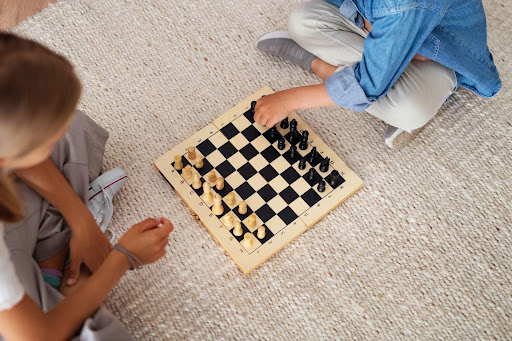
A child who once moved chess pieces without a plan may eventually pause, study the board, and consider several possible moves before deciding. That change rarely happens from playing games alone. It comes from learning how to recognise patterns, understand mistakes, and apply new ideas during practice. Well-structured online chess coaching classes can make this learning process more organised by combining instruction, guided practice, game analysis, and regular feedback in a format children can access from home.
Beginning With A Clear Learning Goal
Chess lessons become more useful when children know what they are working towards. A beginner may need to learn piece movement and checkmate patterns, while a more experienced player may need help with tactical calculation or endgame technique.
A structured program can divide these skills into manageable stages. Instead of introducing too many concepts at once, lessons can build on what the child already understands.
This approach also gives parents a clearer idea of what their child is learning at each stage.
Creating A Comfortable Online Routine
Consistency plays an important role in learning chess. Children may remember an interesting tactic from one lesson, but regular practice gives them opportunities to use that idea repeatedly.
Online learning can make this routine easier to maintain because lessons can take place without travelling to a physical classroom. A fixed schedule also helps children treat chess as a regular activity rather than something they practise only when they feel like playing.
Short, focused sessions can be particularly useful when they include time for both instruction and practical play.
Making Lessons Interactive
Chess is a visual and decision-based game, so children benefit from lessons that allow them to participate rather than simply listen. This makes online chess coaching classes more engaging and practical for young learners.
An instructor can present a position and ask the child to identify threats, calculate possible moves, or find a tactical idea. The child then has to explain the reasoning behind the selected move.
This type of interaction can reveal whether a student genuinely understands a concept or has simply memorised a pattern.
Learning From Real Game Positions
A chessboard becomes a much more useful classroom when children can connect lessons to positions they have actually encountered.
Suppose a child repeatedly loses material because they overlook an opponent’s attack. Reviewing a relevant game position can show exactly where the problem occurred. The coach can then demonstrate a simple checking routine that the child can use in future games.
This makes lessons more practical because new knowledge is connected to an actual playing experience.
Developing Calculation Step By Step
Calculation is one of the skills that develops gradually in chess. Young players often see one attractive move and immediately want to play it without considering the opponent’s response.
Training can encourage them to look one or two moves further before committing to a decision. As their ability improves, they can calculate longer variations and compare different possibilities.
The goal is not to make every move complicated. Instead, children learn when calculation is necessary and how to organise their thoughts before moving a piece.
Using Puzzles To Build Recognition
Chess puzzles provide a focused way to practise specific ideas. A position may require a checkmate, fork, pin, discovered attack, or defensive move. Regular practice through online chess training for kids can help children work on these patterns in a structured way.
Repeated exposure to these patterns helps children recognise familiar tactical situations during actual games. They also learn that a position should be examined carefully before a move is made.
Puzzle practice can therefore complement regular games by isolating one skill at a time.
Improving Through Game Reviews
Winning a game can be exciting, but reviewing it afterwards can reveal opportunities that were missed. The same is true after a loss.
A coach can help a child identify where the position changed, why a particular move created a problem, and what alternative could have been considered.
This process turns mistakes into practical lessons. Over time, children may begin reviewing their own games more thoughtfully instead of simply looking at the final result.
Balancing Coaching And Independent Practice
A coach can explain concepts and correct mistakes, but children also need opportunities to make decisions independently.
Independent games allow them to test new ideas without receiving immediate guidance. They may make errors, discover useful patterns, and gradually develop their own approach to positions.
The strongest learning routine can therefore include a balance between guided lessons, puzzles, game reviews, and independent play.
Supporting Different Learning Speeds
Children do not develop chess skills at identical rates. Some may quickly understand tactics but struggle with endgames, while others may have strong positional awareness but need more calculation practice.
A flexible learning structure allows lessons to address these differences. Instead of moving through every topic at exactly the same pace, instruction can give additional attention to areas where the child needs more practice.
This can make online chess training for kids more personalised and easier to sustain over time.
Preparing Children For Competitive Play
Tournament chess introduces conditions that ordinary practice games may not fully reproduce. Players have limited time, unfamiliar opponents, and positions that require independent decision-making.
Coaching can prepare children for these situations by teaching them how to manage the clock, stay focused after mistakes, and evaluate positions calmly.
Competitive experience can then become another source of learning. Each tournament provides new positions and decisions that can later be discussed during training.
Building Long-Term Interest In Chess
Children are more likely to continue learning when chess remains challenging without becoming overwhelming. Lessons should introduce new ideas while giving students enough time to practise familiar ones.
Interesting puzzles, practical positions, friendly games, and occasional competitions can create variety within the learning routine.
With steady exposure, children can gradually move from simply knowing how the pieces work to understanding why particular decisions matter.
Conclusion
Effective online chess education combines instruction with active participation. Children need opportunities to learn concepts, solve positions, analyse games, practise independently, and receive useful feedback. A well-planned routine can make these activities part of a consistent learning journey.
For families seeking structured chess education from home, top chess academy in India options such as Chessbrainz provide programs that support children across different stages of chess development, giving learners opportunities to build skills through guided online instruction and practice.
