Why does one silver coin sell close to its metal value while another commands a significant premium? The answer often lies in a combination of silver content, rarity, condition, and collector demand. For buyers researching the 2026 canada 1 oz silver maple leaf bu, understanding these factors helps distinguish a practical bullion purchase from a coin with additional collectible appeal. From minting quality to market trends, several characteristics determine what collectors are willing to pay.
What Determines the Value of a Silver Coin?
Silver coins appeal to modern collectors because they combine precious metal content with craftsmanship, history, and the possibility of numismatic value. Numismatic value refers to the additional worth a coin may have because of its rarity, condition, design, or collector demand beyond the value of its silver.
However, not every silver coin carries a significant collectible premium. Some are purchased primarily for their metal content, while others attract buyers willing to pay extra for a scarce issue or an exceptional example. Understanding the difference helps collectors make informed decisions and avoid overpaying.
1. Silver Purity and Metal Content
The amount of pure silver in a coin establishes an important baseline for its value. Coins containing more silver generally have greater underlying metal value, assuming comparable market prices and weights.
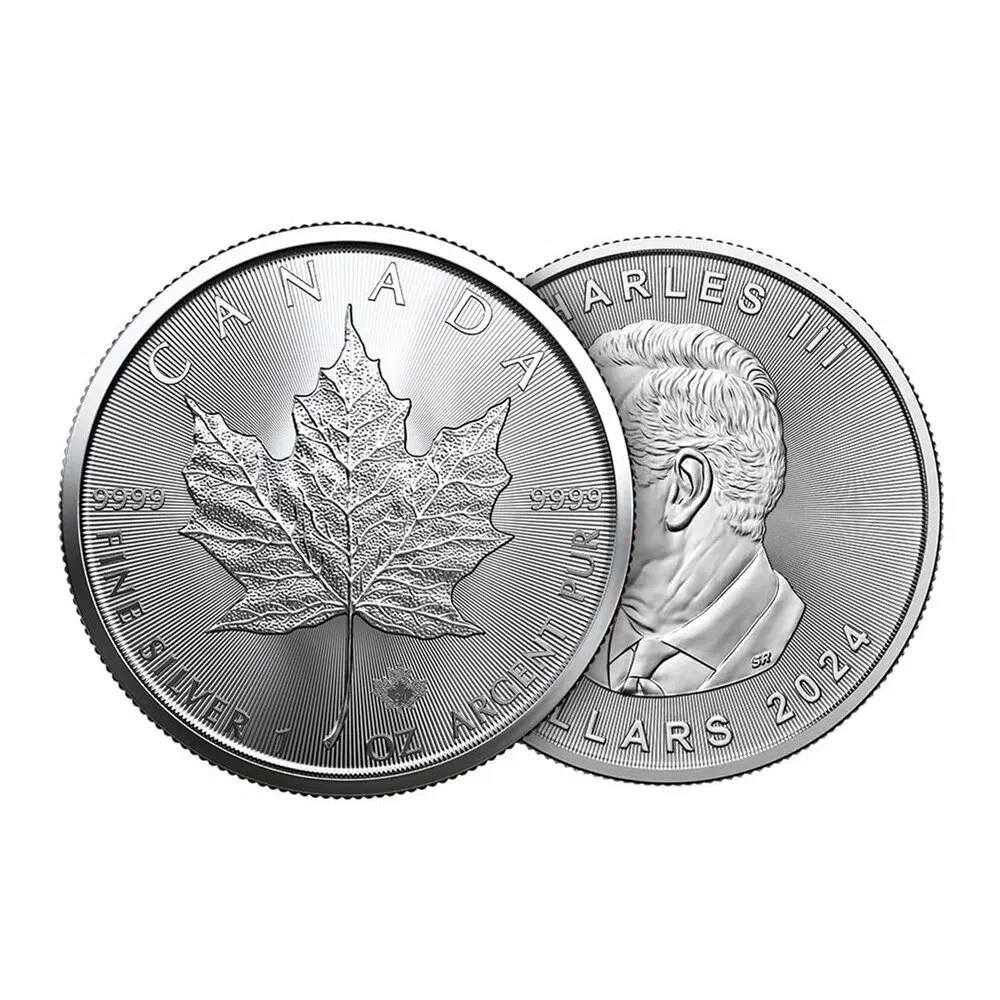
The Royal Canadian Mint’s 2026 Silver Maple Leaf bullion coin contains one troy ounce, or approximately 31.11 grams, of 99.99% pure silver. This high purity is a major reason the series appeals to bullion buyers.
The Royal Canadian Mint
Collectors can estimate a coin’s melt value by multiplying its fine silver content by the current silver spot price. The spot price is the prevailing market price for silver, typically quoted per troy ounce.
For example, if silver trades at $40 per troy ounce, a coin containing one troy ounce of pure silver has a theoretical metal value of $40. This is an illustrative calculation, not a current price or guaranteed resale offer.
A dealer may charge more than this amount when selling the coin or offer less when buying it back. Manufacturing, distribution, demand, and dealer margins contribute to the difference.
2. Rarity and Mintage Numbers
Rarity is another important factor in determining collectible value. Coins produced in limited quantities may attract greater interest when collectors compete to complete a series or acquire a particular issue.
Mintage refers to the number of coins produced. A low mintage can support a premium, but it does not automatically make a coin valuable. Demand must also exist for the specific issue.
The standard 2026 Silver Maple Leaf bullion coin has no fixed mintage, according to the Royal Canadian Mint. Consequently, buyers should not assume that every coin dated 2026 is a limited-edition collectible.
The Royal Canadian Mint
Special editions, commemorative releases, and coins with distinctive design variations may follow different production limits. Collectors should verify the official specifications of the exact product rather than relying on a seller’s general description of a series.
3. Condition, Preservation, and Grading
A coin’s physical condition can influence how desirable it is to collectors. Scratches, dents, fingerprints, discoloration, and other surface imperfections may reduce its appeal, particularly when buyers expect a clean, unhandled example.
Brilliant Uncirculated, commonly abbreviated as BU, generally describes a coin that retains its original mint appearance and has not circulated as ordinary money. It does not necessarily mean the coin is flawless or has received a top numerical grade.
Professional grading services assess eligible coins and may encapsulate them in protective holders with an assigned grade. Such certification can help buyers compare condition and verify the identity of a coin, although grading fees may not be worthwhile for every common bullion issue.
For modern bullion buyers, careful handling and appropriate storage can help preserve a coin’s appearance. Use the edges when handling an unprotected coin, avoid abrasive cleaning, and store it in a suitable capsule or other inert holder.
4. Collector Demand and Market Sentiment
Even a rare coin may struggle to command a premium if few buyers want it. Conversely, a widely available coin can remain popular because collectors and investors recognize its quality, purity, and ease of resale.
Demand for silver coins can be influenced by several factors:
- Changes in the silver spot price.
- Interest in physical precious metals.
- Familiarity with a recognized mint or coin series.
- Collector preferences for particular dates, designs, or finishes.
- Dealer inventory and the availability of competing products.
Bullion coins are especially sensitive to changes in silver prices. Their market prices generally move with the underlying metal, although premiums can rise or fall independently.
Collectors should distinguish between a rising silver price and an increase in numismatic value. A coin may become more expensive simply because silver has appreciated, even when its rarity and collector demand remain unchanged.
Why the Silver Maple Leaf Appeals to Modern Collectors
The Canadian Silver Maple Leaf is a useful example of how metal value, manufacturing quality, recognizable design, and security features work together. Introduced in 1988, the series has become a familiar option for buyers seeking government-minted silver bullion.
5. Recognizable Design and Minting Quality
The maple leaf is a distinctive national symbol that gives the coin an immediately recognizable identity. Its consistent design also makes it easier for collectors to identify the series and compare different annual issues.
The 2026 bullion coin features King Charles III on the obverse and the maple leaf on the reverse. Precision-machined radial lines create a distinctive light-diffracting pattern across the coin’s surface.
These characteristics can enhance a coin’s visual appeal without necessarily making it rare. For many buyers, the attraction lies in owning a well-manufactured silver coin with a familiar design rather than pursuing an unusual or historically scarce issue.
6. Security Features and Authentication
Authenticity matters whenever a buyer purchases precious metals. Counterfeit coins can resemble genuine products, and a convincing appearance alone does not establish that a coin contains the advertised amount of silver.
The 2026 Silver Maple Leaf incorporates several security features, including radial lines, a laser-micro-engraved maple leaf, and BULLION DNA technology. The micro-engraved mark includes the issue-year identifier, which is visible under magnification.
BULLION DNA is an authentication system that allows participating authorized dealers to compare a coin’s identifying features with registered information. Buyers should understand that this technology supports verification; it does not replace sensible purchasing practices or guarantee a particular resale price.
When buying silver coins, purchase from a reputable dealer, check the product specifications, and request appropriate documentation. Be cautious when a seller offers an unusually low price without a credible explanation.
7. Surface Protection and Visual Appeal
Silver bullion coins can develop white spots, often called milk spots, which may affect their appearance. These spots do not necessarily indicate that the silver content or authenticity has changed.
The Royal Canadian Mint uses MINTSHIELD surface protection on Silver Maple Leaf bullion coins dated 2018 and later to reduce the occurrence of white spotting. This process helps preserve visual quality, although it should not be interpreted as a guarantee that every coin will remain completely free of spots.
For collectors, appearance matters most when the goal is to maintain an attractive collection or resell coins to buyers who prioritize condition. For bullion-focused buyers, the metal content may remain the primary consideration.
How Different Factors Affect Silver Coin Value
The following table summarizes the main characteristics to evaluate when comparing silver coins, including standard bullion issues and more specialized collectible releases.
| Value factor | Why it matters | What buyers should check |
|---|---|---|
| Silver purity | Establishes the fine silver content | Stated fineness and verified weight |
| Spot price | Influences underlying metal value | Current silver price per troy ounce |
| Mintage | Can influence scarcity | Official production figures and limits |
| Condition | Affects visual appeal and grading potential | Scratches, dents, spots, and handling marks |
| Collector demand | Influences premiums beyond metal value | Comparable sales and current buyer interest |
| Design and issue | May attract collectors to specific coins | Special finishes, dates, and documented variations |
| Authenticity | Helps establish confidence in the purchase | Dealer reputation and available security checks |
| Dealer premium | Determines the cost above metal value | Total purchase price and competing offers |
No single factor determines a coin’s final market price. A practical assessment combines the coin’s silver content with its condition, availability, demand, and the actual prices buyers are paying for comparable examples.
How to Evaluate a Silver Coin Before Buying
Knowing what makes a coin valuable is only useful when you can apply that knowledge to an actual purchase. A careful comparison of product details, pricing, and condition can help prevent common buying mistakes.
8. Compare the Premium Over Spot Price
The premium is the amount charged above a coin’s underlying silver value. It commonly reflects minting, distribution, dealer expenses, and market demand.
Suppose two dealers offer the same one-ounce bullion coin. One charges $45 and another charges $48 when the silver spot price is $40 per ounce. Their premiums are $5 and $8, respectively, before any applicable taxes or additional fees.
The lower price may appear more attractive, but buyers should also consider shipping costs, authenticity safeguards, payment fees, and the dealer’s buyback terms.
For collectible coins, a premium may reflect scarcity or exceptional condition rather than manufacturing costs alone. Ask what justifies the premium and compare it with recent sales of equivalent coins.
9. Understand the Difference Between Bullion and Numismatic Coins
Bullion coins primarily derive their value from precious metal content, whereas numismatic coins are valued partly for their historical or collectible characteristics. Some coins fall into both categories.
A standard Silver Maple Leaf is generally purchased as a bullion product. A specially issued coin with a documented limited mintage, distinctive finish, or unusual feature may appeal more strongly to collectors.
However, special packaging or a seller’s use of words such as rare and exclusive does not automatically establish a higher market value. Buyers should verify the product’s official specifications and look for evidence of actual collector demand.
10. Research the Resale Market
A coin’s purchase price does not tell you what you can recover when selling it. Retail asking prices can differ considerably from dealer buyback offers and completed private sales.
Before buying, check several reputable dealers to determine whether they purchase the coin and what conditions affect their offers. For a potentially scarce collectible, compare completed sales of the same issue and grade rather than relying only on active listings.
It is also important to consider liquidity, meaning how easily an asset can be sold at a reasonable price. Widely recognized bullion coins may be easier to trade than unfamiliar issues with a narrow collector base.
Common Mistakes Silver Coin Collectors Should Avoid
Even experienced buyers can misjudge a coin’s value when they focus too heavily on one attractive feature.
- Assuming every new date is rare: An annual design date does not establish limited production or scarcity.
- Confusing BU with perfect condition: Brilliant Uncirculated coins may still have minor imperfections from manufacturing or handling.
- Paying for unsupported rarity claims: Verify limited-mintage statements and special design features through reliable documentation.
- Ignoring total costs: Shipping, payment charges, storage, and potential resale spreads can affect the overall economics of a purchase.
- Cleaning a coin to improve its appearance: Abrasive cleaning or polishing can leave permanent marks and reduce collector appeal.
- Overlooking storage: Improper handling and unsuitable storage conditions can damage a coin’s surface or packaging.
A useful rule is to establish why you want the coin before paying a premium. Buyers focused on silver accumulation may prioritize competitive pricing and recognizable bullion. Collectors seeking numismatic value may place greater emphasis on rarity, condition, provenance, and documented market demand.
Building a Silver Coin Collection With a Clear Strategy
A successful collection does not need to contain the rarest or most expensive coins. It should reflect a buyer’s interests, financial limits, and reasons for collecting.
Some collectors build date-based sets, acquiring one example from each annual issue. Others concentrate on particular mints, national designs, special finishes, or coins that combine precious metal content with historical significance.
For a beginner, standard bullion coins can offer a straightforward introduction to weighing metal value against retail premiums. More specialized issues require additional research because their prices may depend on a smaller pool of interested buyers.
Keep purchase receipts, product descriptions, grading records, and relevant authenticity documentation. Record the amount paid and the reason for buying each coin. These details can make it easier to evaluate the collection later, compare resale offers, and understand whether a premium was justified.
Remember that silver prices fluctuate, collector preferences change, and future resale values are uncertain. Treat collecting as a long-term interest rather than assuming every purchase will appreciate.
Conclusion
Silver coins gain value through a combination of precious metal content, condition, rarity, recognizable design, authenticity, and market demand. Understanding how these elements interact helps modern collectors distinguish ordinary bullion premiums from genuine collectible appeal. The Silver Maple Leaf illustrates this balance through its high silver purity, established design, and security features, although its standard bullion version is not automatically rare. Before purchasing, verify the specifications, compare total prices, inspect the coin’s condition, and research realistic resale opportunities. A thoughtful buying strategy can help you build a collection that suits your interests without paying unsupported premiums.
Frequently Asked Questions
1. What makes a silver coin valuable to collectors?
A silver coin’s value depends on its fine silver content, condition, rarity, design, authenticity, and collector demand. Some coins are valued primarily as bullion, while others command additional premiums because of scarcity or desirable characteristics.
2. Is the 2026 Silver Maple Leaf a good coin for beginners?
It can be a practical starting point for someone interested in silver bullion because it contains one troy ounce of 99.99% pure silver and has recognizable security features. Whether it suits a beginner depends on the purchase premium, budget, storage arrangements, and collecting goals.
3. What does BU mean on a silver coin listing?
BU stands for Brilliant Uncirculated. It generally describes a coin that has not circulated as ordinary money and retains its original mint appearance. It does not guarantee a flawless surface or a specific professional grade.
4. Do silver coins become more valuable as they age?
Not necessarily. Age alone does not guarantee appreciation. A coin’s value depends on factors such as surviving supply, condition, silver prices, and demand among collectors. Some modern coins retain modest premiums, while particular older issues become highly desirable.
5. How can I determine whether a silver coin is worth its asking price?
Start by calculating its approximate silver value using the current spot price and fine silver content. Then compare the dealer’s premium, condition, authenticity, and recent sales of comparable coins. Consider shipping and other fees, as well as the likely resale offer, before making a decision.