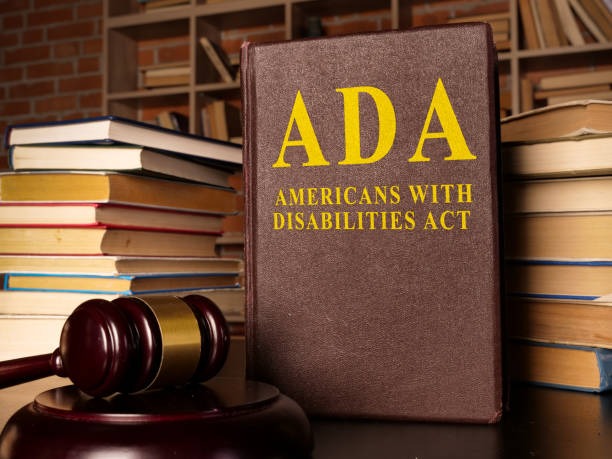
A website can look polished and still leave visitors behind. People who use screen readers, keyboards, voice controls, or captions depend on code and content being built to support them. Questions about legal exposure often follow, so some businesses consult an ADA website compliance attorney before problems ever arise. This guide explains how the Americans with Disabilities Act relates to websites, what the Web Content Accessibility Guidelines require, how to test a site, and what the 2026 government rule changed.
How the ADA Applies to Business Websites and Online Services
The Americans with Disabilities Act, enacted in 1990, is the civil rights law that prohibits discrimination against people with disabilities. Its five titles cover employment, public entities, public accommodations, telecommunications, and miscellaneous provisions, and Title III on public accommodations is the one usually discussed for business websites.
The ADA does not set a technical standard for private business websites, and courts have taken different approaches to how Title III applies online. A business unsure where it stands may speak with an ADA website compliance attorney to understand its exposure and options. Access needs can involve hearing loss, mobility impairments, cognitive disabilities, and vision impairment.
What WCAG Requires and Which Conformance Level to Target
Level AA includes requirements such as a contrast ratio of at least 4.5 to 1 for normal text. For ADA accessibility for websites, WCAG then organizes its guidance around four principles:
- Perceivable: provide alt text for images and captions for video.
- Operable: make every function usable with a keyboard alone.
- Understandable: use clear language and predictable navigation.
- Robust: keep code compatible with screen readers and voice tools.
How to Test a Website for Accessibility Problems Step by Step
Start with automated scanners such as WAVE, Axe, Lighthouse in Google Chrome, or Siteimprove. Manual testing fills the gaps. Try moving through the site with the Tab key alone, using forms, buttons, and links without a mouse. Listen to the page with a screen reader such as NVDA on Windows or VoiceOver on Mac, and check that videos have captions and text contrasts well with the background.
Feedback from users with disabilities shows what testing can miss. When results are unclear, a review by an ADA attorney for website accessibility can add a legal view to the technical findings. Together, these steps give a fuller picture than any single method.
What the 2026 Government Rule Changed and Who It Actually Covers
In April 2024, the Department of Justice finalized a Title II rule requiring state and local government websites and mobile apps to meet WCAG 2.1 Level AA. An interim final rule published in April 2026 extended the deadlines by one year, to April 26, 2027 for entities serving 50,000 or more people and April 26, 2028 for smaller entities and special districts.
That rule covers public entities, not private businesses. Whether an ADA website compliance attorney is needed for a private site depends on how Title III applies. WCAG 2.1 Level AA is often discussed as a useful reference point.
What Businesses Can Do Now to Document and Improve Accessibility
Documented accessibility work is easier to maintain. Businesses can keep it organized with a short checklist, ideally reviewed by an ADA website compliance attorney, that covers these steps:
- Audit the site with automated and manual testing.
- Fix issues by priority, starting with navigation, forms, and checkout.
- Record each change and the date it was made.
- Retest after updates and train staff who publish content.
Conclusion
Website accessibility combines law, technical standards, and ongoing maintenance. The ADA sets the obligation, WCAG supplies the benchmark most organizations use, and testing shows where a site falls short. Resources from Zemel Law explain how these pieces connect, which gives businesses a starting point for asking informed questions about their own sites. Careful documentation then makes each improvement easier to track.
With the legal background, the standards, and the testing methods in view, a business can decide what to fix first and when to seek professional advice.

