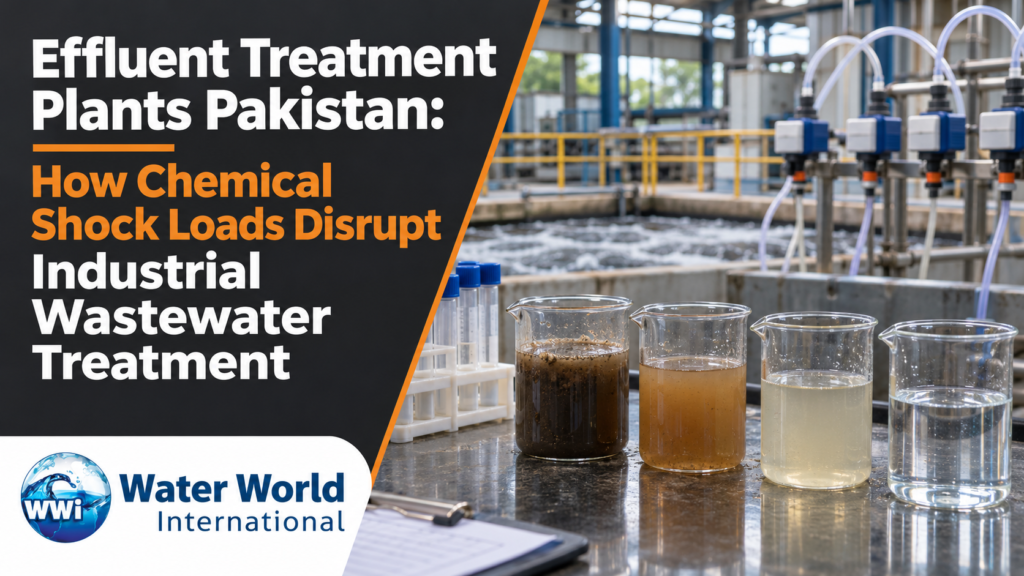
A factory’s wastewater treatment plant may operate normally for weeks before experiencing a sudden decline in performance. Pumps continue running, blowers supply air, and operators follow their usual routines. Yet the treated water quality begins to deteriorate.
The problem may originate somewhere inside the production facility rather than within the treatment equipment.
When evaluating Effluent Treatment Plants Pakistan solutions, businesses should consider how sudden changes in wastewater chemistry affect treatment stability.
Understanding chemical shock loads helps factory managers investigate unexpected treatment problems, improve production coordination, and make informed decisions about plant improvements.
Effluent Treatment Plants Pakistan: Understanding Chemical Shock Loads
What Is a Chemical Shock Load in Industrial Wastewater?
A chemical shock load occurs when wastewater containing unusually high concentrations of chemicals or inhibitory substances suddenly enters a treatment system.
These changes can interfere with normal treatment processes, particularly those relying on living microorganisms.
Chemical shock loading differs from hydraulic overload, which occurs when excessive wastewater volume enters the plant. Organic overloading involves biodegradable pollution exceeding the system’s treatment capacity.
Although these conditions can occur together, each requires a different technical assessment.
Common Sources of Unexpected Chemical Discharges
Industrial wastewater characteristics can change considerably during manufacturing operations.
Potential sources of chemical shock loads include:
- Concentrated wastewater from textile dyeing batches.
- Acidic or alkaline equipment cleaning solutions.
- Unexpected chemical spills entering production drains.
- Changes in manufacturing chemicals or raw materials.
- Discharge from chemical storage and processing areas.
Factories should understand which activities create wastewater that may require separate collection or pretreatment.
How Chemical Shock Loads Affect Biological Wastewater Treatment
Understand the Effects of pH Fluctuations and Toxic Compounds
Biological treatment depends on microorganisms working under suitable environmental conditions.
Sudden changes in wastewater acidity or alkalinity can interfere with microbial activity. Certain metals, solvents, disinfectants, and industrial chemicals may also inhibit biological treatment.
The impact depends on chemical concentration, exposure duration, treatment design, and existing biological conditions.
A wastewater stream that causes limited disruption in one plant may create significant problems in another.
Recognize Changes in Microbial Activity and Organic Pollutant Removal
When microorganisms experience chemical stress, their ability to break down biodegradable pollutants may decline.
Operators might notice changes in chemical oxygen demand (COD) or biochemical oxygen demand (BOD) removal.
Dissolved oxygen readings may also change unexpectedly. For example, inhibited microorganisms may consume less oxygen even when aeration equipment continues operating.
Such readings need careful interpretation. Increasing aeration alone may not resolve a problem caused by toxic wastewater.
Identify Changes in Sludge Settling and Treated Effluent Quality
Chemical disturbances may affect the structure and settling behaviour of biological sludge.
Possible warning signs include:
- Poor sludge settling in clarification tanks.
- Increased suspended solids in treated wastewater.
- Unusual foaming or changes in sludge appearance.
- Inconsistent outlet water quality.
These symptoms can also result from other operational problems. Laboratory testing and process investigation are necessary before identifying chemical shock loading as the cause.
Identify Chemical Shock Loading Through Wastewater Monitoring
Monitor Influent Quality and Important Process Parameters
Monitoring incoming wastewater can help operators recognize unusual conditions before significant treatment problems develop.
Relevant measurements may include pH, conductivity, COD, wastewater flow, and industry-specific contaminants.
Conductivity can indicate changes in dissolved ionic substances. However, it cannot identify every chemical or establish wastewater toxicity.
Biological treatment operators should also monitor suitable process parameters, including dissolved oxygen and sludge conditions.
Compare new readings against established operating records rather than relying on isolated measurements.
Connect Abnormal ETP Readings with Factory Production Activities
Production records can provide valuable clues when treatment performance changes unexpectedly.
Consider a hypothetical textile factory that introduces a new cleaning chemical. Shortly afterwards, its biological treatment system begins showing inconsistent results.
The maintenance team might initially suspect equipment failure. However, reviewing chemical usage and cleaning schedules could reveal another explanation.
This example illustrates why ETP operators need regular communication with production departments.
Record when unusual wastewater was generated, which processes were operating, and what treatment changes followed.
Use Laboratory Testing to Investigate Unusual Treatment Conditions
Routine wastewater tests may not identify the specific substance responsible for biological inhibition.
Targeted laboratory analysis or treatability testing may be necessary when unusual chemical contamination is suspected.
Qualified specialists can help determine appropriate tests based on the manufacturing process and chemicals involved.
Avoid making major treatment adjustments until the available evidence has been reviewed.
Reduce Shock-Loading Risks Through Better Effluent Management
Improve Wastewater Equalization and Stream Segregation
A properly designed equalization tank helps reduce sudden variations in incoming wastewater flow and concentration.
However, equalization does not automatically remove toxic chemicals. Certain concentrated or incompatible wastewater streams may require separate collection and specialist treatment.
Review drainage arrangements to identify where problematic wastewater enters the main collection system.
Suitable segregation can protect downstream treatment processes from unnecessary chemical disturbances.
Coordinate Industrial Production with ETP Operations
Many treatment problems become harder to manage when production and environmental departments work independently.
ETP operators should receive advance information about:
- Changes in manufacturing chemicals.
- Scheduled machinery and tank cleaning.
- Unusual production batches.
- Maintenance activities involving chemical solutions.
- Accidental releases requiring emergency procedures.
Clear communication allows responsible personnel to assess wastewater management arrangements before potentially disruptive activities begin.
Any unusual chemical discharge should be handled according to approved site procedures and qualified technical guidance.
Assess Treatment Plant Design and Process Protection Requirements
Recurring chemical disturbances may indicate limitations in the existing treatment configuration.
When assessing Effluent Treatment Plants Pakistan solutions, businesses should consider wastewater variability, pretreatment needs, monitoring equipment, and process protection.
An engineering assessment may identify opportunities to improve wastewater collection, equalization, chemical treatment, or biological process protection.
Equipment upgrades should address demonstrated treatment problems. Adding machinery without understanding the original cause may increase expenses without improving performance.
Prepare a Technical Assessment for Recurring ETP Performance Problems
Before requesting technical assistance, collect recent wastewater laboratory reports, chemical usage records, production schedules, and ETP operating logs.
Include information about unusual pH readings, equipment conditions, biological treatment performance, and existing pretreatment arrangements.
These records help engineers investigate possible connections between industrial activities and treatment instability.
Is your factory experiencing recurring biological treatment problems or unexpected changes in effluent quality?
Share your wastewater analysis and operating concerns with Water World International. Discuss suitable treatment assessments and potential engineering improvements based on your facility’s actual requirements.
Frequently Asked Questions
What Causes Chemical Shock Loading in Industrial Effluent Treatment Plants?
Chemical shock loading can result from concentrated wastewater releases, chemical spills, cleaning solutions, and sudden manufacturing changes. These events may introduce substances that interfere with normal wastewater treatment.
How Does Chemical Shock Loading Affect Biological Wastewater Treatment?
Certain chemicals can inhibit microorganisms responsible for breaking down biodegradable pollutants. This may reduce treatment efficiency, affect sludge settling, and contribute to inconsistent treated-water quality.
Can an Equalization Tank Prevent Every Chemical Shock Load?
No. Equalization can reduce variations in wastewater concentration and flow. However, toxic or incompatible substances may require separate collection, pretreatment, or specialist wastewater management.
What Should Factories Check When ETP Performance Suddenly Declines?
Review incoming wastewater quality, production activities, chemical usage, equipment conditions, and operating records. Arrange appropriate laboratory testing and qualified technical assessment before making significant treatment adjustments.