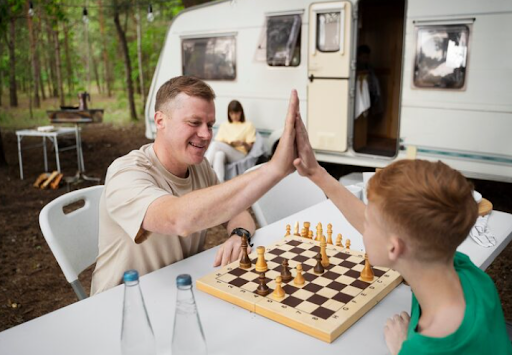
Competitive chess demands much more than knowing how the pieces move. As players progress, the game becomes a test of calculation, strategic judgment, concentration, preparation, and emotional discipline. A strong move is not simply one that looks attractive on the board; it is a decision supported by accurate analysis and a clear understanding of the position. For ambitious players, best advanced chess lessons in the USA can provide structured guidance to transform individual skills into a more complete competitive approach.
The journey from tactical understanding to tournament readiness does not happen overnight. Players need to strengthen their ability to identify opportunities, anticipate threats, evaluate positions, and remain composed when the game becomes complicated. With consistent training and practical experience, these skills can gradually become part of a player’s natural decision-making process.
Building a Strong Tactical Foundation
Tactics are among the most visible elements of competitive chess. Forks, pins, skewers, discovered attacks, double attacks, deflections, and sacrifices can change the direction of a game within a few moves. However, memorising tactical patterns is not enough. Players need to recognise when those patterns can emerge from an actual position. Regular tactical practice helps develop pattern recognition. Instead of calculating every possibility from the beginning, experienced players often recognise familiar structures and immediately identify potential tactical ideas. This saves valuable time and allows deeper calculation when the position requires it.
Training should also include positions of varying complexity. Simple combinations can strengthen recognition, while challenging positions teach players to calculate several moves ahead. Reviewing incorrect solutions is equally important because it reveals whether the mistake came from overlooking a defensive resource, miscalculating a variation, or evaluating the resulting position incorrectly.
Moving Beyond Tactics to Strategic Thinking
As players become stronger, competitive improvement requires more than tactical sharpness. Strategic understanding determines how a player creates favourable positions before tactical opportunities even appear.
Important strategic concepts include pawn structure, piece activity, weak squares, open files, space, king safety, exchanges, and long-term plans. A player may have no immediate tactical combination yet still gain an advantage by improving a poorly placed piece or creating a weakness in the opponent’s position.
Developing a Reliable Opening Repertoire
Opening preparation becomes increasingly significant as players approach tournament-level competition. However, preparation should not be reduced to memorising long sequences of moves. A useful repertoire combines theoretical knowledge with an understanding of the ideas behind each opening. Players should know the typical pawn structures, strategic plans, tactical themes, development priorities, and common middlegame transitions associated with their chosen systems.
For students who need flexibility around school, work, or other commitments, an advanced chess course online can provide a structured environment for studying openings while continuing to practise tactics, strategy, and practical play. Online learning can also make it easier to revisit lessons, analyse games, and work consistently according to an organised training plan.
Strengthening Calculation and Decision-Making
Calculation is one of the most important skills separating casual play from serious competition. Players must learn to examine forcing moves, calculate variations accurately, and compare resulting positions. A practical calculation process often begins with identifying checks, captures, and threats. From there, candidates can be examined according to the opponent’s strongest responses. This approach reduces impulsive decisions and encourages disciplined analysis.
Another valuable habit is visualisation. Players should gradually practise calculating without physically moving the pieces. This develops the ability to hold positions mentally and follow changing variations accurately. Calculation training should also include time limits. Tournament games do not provide unlimited thinking time, so players must learn when deep calculation is necessary and when a sound positional decision is sufficient.
Making Endgame Technique a Competitive Advantage
Endgames are sometimes neglected because players are more interested in openings and tactical combinations. Yet many tournament games are decided after the major tactical complications have disappeared. Players should develop knowledge of fundamental king-and-pawn positions, rook endgames, minor-piece endings, opposition, pawn promotion techniques, and methods of converting material advantages. More advanced students can study practical rook endings, piece coordination, defensive resources, and transitions from middlegames into favourable endgames.
Turning Training Into Practical Tournament Skills
Knowing chess concepts and applying them under tournament conditions are two different challenges. Practical games expose weaknesses that exercises alone may not reveal. Regular competitive practice helps players become familiar with time controls, clocks, notation, unfamiliar opponents, pressure, and the need to make decisions independently. Internal tournaments and structured practice games can provide useful opportunities to develop this experience in a controlled setting. Such competitive activities are also reflected in the training approach promoted by the client’s online programs.
Developing Tournament Discipline and Mental Endurance
Tournament readiness is also a mental skill. Players may spend several hours concentrating on a single game, often while dealing with unexpected complications. Staying calm after making a mistake is therefore just as important as finding a strong move. A disciplined tournament routine can include arriving prepared, checking equipment, managing time carefully, maintaining concentration, and taking appropriate breaks between rounds. During the game, players should avoid dwelling on previous mistakes. Each position requires a fresh evaluation. Mental endurance develops through sustained practice. Longer training games, calculation exercises, tournament simulations, and post-game analysis can gradually improve concentration and resilience.
Final Thoughts
The transition from tactical understanding to tournament readiness is ultimately a process of connecting different areas of chess knowledge. Tactics help players identify opportunities, while strategy helps them create those opportunities. Calculation supports accurate decisions, and opening and endgame knowledge provide structure across the different phases of a game. Practical competition then brings these abilities together under realistic conditions.
For players seeking a structured path toward stronger competitive performance, finding the best chess academy in the USA can also provide access to systematic training and guidance suited to their development goals. For players who want to move beyond casual chess and prepare more seriously for competition, Chessbrainz provides a structured online learning environment designed to support progressive skill development. Its approach brings together strategic understanding, tactical practice, game analysis, and competitive preparation, helping learners build the knowledge, discipline, and confidence required to make stronger decisions throughout a game.
