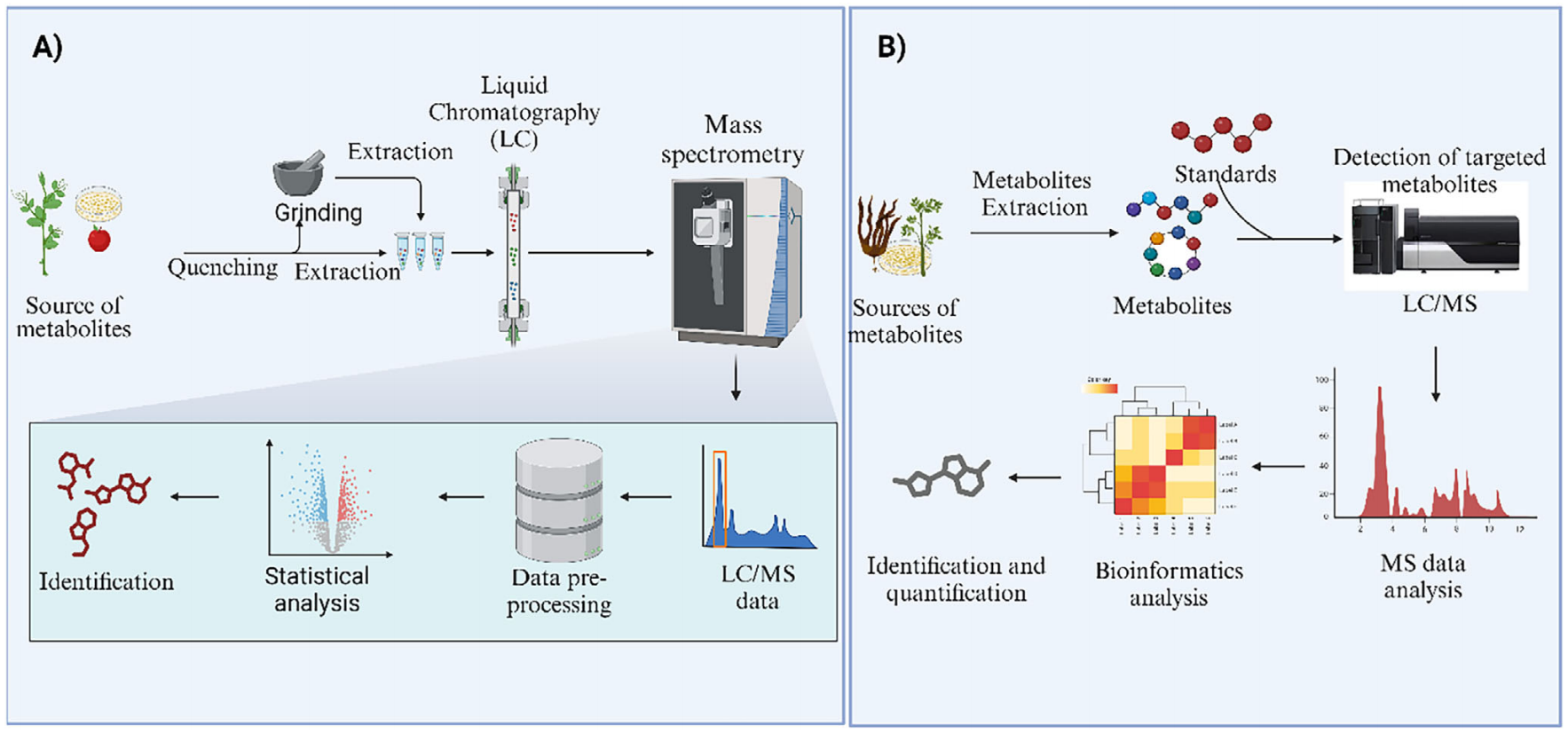
Metabolomics research plays an essential role in understanding biological processes, identifying disease-associated biomarkers, and studying metabolic changes in living organisms. As scientific research becomes more advanced, the demand for accurate and reliable analytical techniques continues to grow.
One of the most important developments in metabolomics technology is liquid chromatography–mass spectrometry (LC-MS). This analytical technique enables researchers to detect, separate, identify, and measure metabolites in complex biological samples.
By combining advanced chromatography with sensitive mass spectrometry, LC-MS has transformed metabolomics research, making it possible to investigate metabolic pathways and understand biological systems in greater detail.
What Is LC-MS in Metabolomics Technology?
Liquid chromatography–mass spectrometry (LC-MS) is an analytical technique that combines two powerful technologies: liquid chromatography (LC) and mass spectrometry (MS).
Liquid chromatography separates compounds within a biological sample based on their interactions with the mobile and stationary phases. Mass spectrometry then detects ionized molecules according to their mass-to-charge ratios.
Together, these technologies allow researchers to analyze complex mixtures containing numerous metabolites.
In modern metabolomics technology, LC-MS is widely used to investigate metabolic changes in biological samples, including blood, urine, tissues, and cultured cells.
The technique supports both targeted and untargeted metabolomics studies, helping scientists explore known metabolites while discovering potentially important metabolic features.
How Does LC-MS Improve Metabolomics Research?
1. Increased Sensitivity in Metabolite Detection
One of the greatest advantages of LC-MS is its high analytical sensitivity.
Many metabolites occur at extremely low concentrations, making them difficult to detect using less sensitive analytical methods.
LC-MS enables researchers to measure low-abundance metabolites when suitable sample preparation, chromatography, and instrument settings are used.
This sensitivity is particularly valuable for:
- Disease biomarker discovery
- Drug metabolism studies
- Cellular metabolism research
- Nutritional metabolomics
- Environmental and toxicological investigations
Improved detection capabilities allow scientists to examine metabolic changes that might otherwise remain undetected.
2. Accurate Metabolite Identification
Identifying metabolites correctly is one of the major challenges in metabolomics research.
Biological samples contain numerous compounds with similar chemical structures, molecular masses, and chromatographic properties.
LC-MS provides important analytical information, including accurate mass measurements, retention times, and fragmentation patterns.
Researchers can compare these characteristics with authentic reference standards to improve identification confidence.
For example, the Mass Spectrometry Metabolite Library of Standards (MSMLS) from IROA Technologies contains biochemical standards covering a broad range of primary metabolism.
Iroatech standards support retention-time matching, mass spectrometry method development, and metabolite identification.
Using authenticated reference materials helps researchers reduce uncertainty and produce more reliable metabolomics results.
3. Improved Quantitative Metabolomics Analysis
Quantitative metabolomics focuses on measuring metabolite abundance and understanding how concentrations change under different biological conditions.
LC-MS supports quantitative analysis by producing signals that can be related to metabolite concentrations through appropriate calibration and validation.
However, factors such as ion suppression, matrix effects, and instrument variability can influence analytical measurements.
To address these challenges, researchers often use internal standards, quality-control samples, and validated analytical procedures.
Stable isotope-labeled internal standards are particularly useful because they can help compensate for analytical variation when their behavior closely matches the compounds being measured.
These approaches improve the reliability of quantitative measurements and support meaningful comparisons between experimental samples.
The Role of Metabolite Standards in LC-MS Research
Authentic metabolite standards are essential components of reliable metabolomics technology.
Although advanced mass spectrometers provide detailed analytical data, accurate metabolite identification often requires comparison with verified reference compounds.
Metabolite standards help researchers establish retention times, examine fragmentation patterns, and evaluate analytical performance.
They also support method optimization and the development of reproducible laboratory workflows.
Combining LC-MS instrumentation with suitable reference materials allows laboratories to strengthen metabolite identification and improve confidence in their experimental findings.
Applications of LC-MS in Metabolomics Research
Disease Biomarker Discovery
LC-MS is widely used to investigate metabolic differences between healthy and diseased biological samples.
Researchers analyze metabolite profiles to identify biochemical changes associated with conditions such as cancer, diabetes, and metabolic disorders.
These investigations can contribute to biomarker research and improve understanding of disease-related metabolic pathways.
However, potential biomarkers require additional validation before they can be considered clinically useful.
Pharmaceutical and Drug Development
In pharmaceutical research, LC-MS helps scientists investigate drug metabolism and the biochemical effects of therapeutic compounds.
Researchers can examine metabolic responses to drug exposure, identify relevant metabolites, and study changes in biological pathways.
These findings support drug discovery, pharmacological research, and the investigation of potential treatment-related effects.
Nutritional and Food Metabolomics
Metabolomics technology also contributes to nutrition and food science.
LC-MS can help researchers investigate how dietary components influence metabolic activity.
Applications include studying nutrient metabolism, identifying food-related metabolites, and examining biochemical responses to different diets.
These investigations provide valuable information about interactions between nutrition and human metabolism.
Environmental Metabolomics
Environmental researchers use LC-MS to study metabolic responses to pollutants, chemical exposure, and environmental stress.
By comparing metabolite profiles, scientists can investigate how organisms respond to changes in their surroundings.
This approach supports environmental toxicology, ecological research, and studies of biological adaptation.
Challenges in LC-MS Metabolomics
Despite its advantages, LC-MS presents several analytical challenges.
Complex Biological Samples
Biological samples contain compounds with different chemical properties and concentrations.
Achieving comprehensive metabolite coverage requires appropriate extraction procedures, chromatographic methods, and ionization conditions.
No single LC-MS method can reliably detect every metabolite present in a biological system.
Ion Suppression and Matrix Effects
Compounds present in complex samples may interfere with the ionization of target metabolites.
This phenomenon, commonly known as ion suppression, can affect signal intensity and quantitative accuracy.
Careful sample preparation, chromatographic optimization, and suitable internal standards can help reduce these effects.
Data Processing and Interpretation
LC-MS experiments generate large datasets containing numerous analytical features.
Researchers must distinguish genuine metabolite signals from background noise, contaminants, isotopes, and analytical artifacts.
Specialized software, curated metabolite libraries, and validated data-processing workflows help improve the reliability of metabolomics analysis.
Research published in Nature Methods provides additional scientific context relevant to analytical methods and reliable metabolomics research.
Best Practices for Reliable LC-MS Metabolomics
Successful metabolomics research requires more than advanced analytical instruments.
Researchers should establish standardized workflows that support consistent sample preparation, accurate measurements, and reliable data interpretation.
Important practices include:
- Standardized sample preparation: Use consistent collection, extraction, and storage procedures to reduce unwanted variability.
- Appropriate internal standards: Select suitable standards to monitor analytical performance and support quantitative correction.
- Quality-control samples: Analyze pooled quality-control samples and reference materials to evaluate instrument stability.
- Authentic metabolite libraries: Compare analytical results with verified standards to strengthen metabolite identification.
- Validated data processing: Apply appropriate peak detection, alignment, normalization, and statistical analysis methods.
- Clear reporting: Document analytical procedures, identification confidence, and quality-control results.
A scientific review available through the National Library of Medicine discusses metabolite identification and quantification strategies in LC-MS-based metabolomics.
Following these practices helps laboratories improve reproducibility and produce more meaningful biological results.
The Future of LC-MS and Metabolomics Technology
The future of metabolomics technology is closely connected to improvements in analytical instrumentation, computational methods, and metabolite reference databases.
Advances in high-resolution mass spectrometry continue to improve the ability to investigate complex biological samples.
Meanwhile, developments in automated data processing and computational analysis are helping researchers interpret increasingly large metabolomics datasets.
Machine learning and advanced statistical methods may further support metabolite annotation, pattern recognition, and biological interpretation.
The continued development of comprehensive metabolite libraries and standardized analytical workflows will also be important for improving consistency across laboratories.
Together, these advances can make LC-MS metabolomics more efficient, reproducible, and informative.
Frequently Asked Questions
What is metabolomics technology?
Metabolomics technology includes analytical methods and computational tools used to identify, measure, and study small molecules known as metabolites in biological systems.
Why is LC-MS important in metabolomics research?
LC-MS provides sensitive detection, chromatographic separation, and detailed mass spectrometric information, making it valuable for metabolite profiling, identification, and quantitative analysis.
How does LC-MS improve metabolite identification?
LC-MS provides accurate mass, retention-time, and fragmentation information. Comparing these measurements with authentic reference standards helps improve identification confidence.
What is the difference between targeted and untargeted metabolomics?
Targeted metabolomics focuses on measuring predefined metabolites, while untargeted metabolomics aims to detect a broad range of metabolic features without limiting analysis to a predetermined compound list.
Why are metabolite standards important?
Metabolite standards provide verified reference information that supports compound identification, analytical method development, quality control, and quantitative measurements.
Conclusion
LC-MS has become an essential analytical technique in modern metabolomics research because of its sensitivity, versatility, and ability to analyze complex biological samples.
By improving metabolite detection, supporting accurate identification, and enabling quantitative analysis, LC-MS helps researchers investigate biological pathways and understand metabolic changes.
However, reliable results depend on more than instrument performance. Authentic metabolite standards, appropriate quality-control procedures, and validated analytical methods are equally important.
As metabolomics technology continues to advance, combining LC-MS with reliable reference libraries and standardized workflows will remain essential for generating accurate and reproducible scientific results.