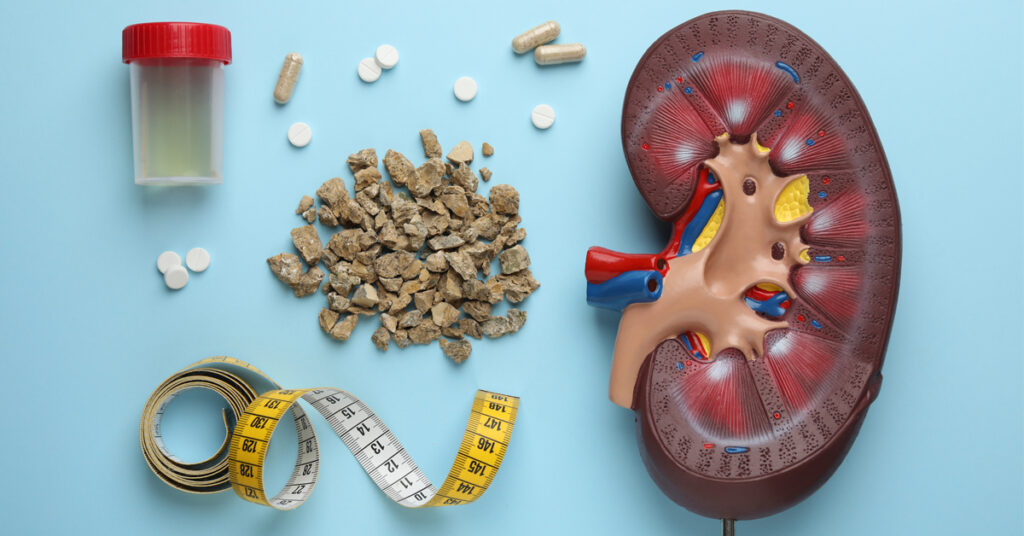
Few kinds of pain are described as vividly as that of a kidney stone. People who have passed one often compare it to childbirth, and it tends to arrive without warning – a sudden, gripping ache in the side or lower back that can send an otherwise healthy person to the emergency room. Kidney stones are common, increasingly so, and while they can be excruciating, the reassuring truth is that most are treatable and, crucially, many are preventable.
Understanding how stones form, what raises the risk, and which habits keep them at bay can spare a great deal of pain – and, for the roughly half of stone-formers who go on to have another within a decade, a repeat episode.
What a kidney stone actually is
A kidney stone is a hard deposit made of minerals and salts that crystallise inside the kidney. Urine normally contains substances that keep these minerals dissolved, but when the balance tips – too little fluid, too much of certain substances – crystals begin to form and clump together. Over weeks or months they can grow from a grain of sand to something several millimetres or larger.
Not all stones are the same. Calcium oxalate stones are by far the most common. Uric acid stones are linked to diets high in animal protein and to conditions such as gout. Struvite stones are associated with certain urinary infections, and rarer cystine stones run in families. The type matters, because prevention is most effective when tailored to it – which is why doctors often ask patients to catch and submit a passed stone for analysis.
Why stones form
The single biggest factor is concentration. When you do not drink enough fluid, or lose a lot through heat and sweat, urine becomes concentrated and minerals crystallise more readily. This is why stones are more common in hot climates, among people who work outdoors, and during summer months.
Diet plays a major role too. A high intake of salt increases the calcium excreted in urine. A diet heavy in animal protein raises acid levels and uric acid. Being overweight, having diabetes, and certain digestive conditions all increase risk. Genetics matter as well – if stones run in your family, your own risk is higher. Interestingly, cutting dietary calcium too far can backfire: a normal calcium intake actually helps bind oxalate in the gut and can reduce stone formation.
The symptoms – and the emergency signs
A small stone sitting quietly in the kidney may cause no symptoms at all. Trouble usually begins when a stone moves into the ureter, the narrow tube leading to the bladder, and blocks the flow of urine. The classic result is renal colic: waves of severe pain in the flank that may radiate to the lower abdomen and groin, often with nausea, vomiting and blood in the urine. Smaller stones may cause only a dull ache or a frequent urge to urinate.
Certain signs demand urgent care. A stone accompanied by fever and chills may mean an infection is trapped behind the blockage – a genuine medical emergency. Likewise, being unable to pass any urine, or pain so severe it cannot be controlled at home, warrants immediate attention.
How stones are treated
Treatment depends on size and location. Many small stones – generally under five millimetres – pass on their own with plenty of fluids, pain relief and time. Doctors sometimes prescribe medication that relaxes the ureter to help a stone along.
Larger or stubborn stones can be treated without open surgery. Shockwave lithotripsy uses focused sound waves to break a stone into fragments small enough to pass. Ureteroscopy passes a thin scope up through the urinary tract to reach the stone and break it with a laser. For very large stones, percutaneous nephrolithotomy removes them through a small incision in the back. These minimally invasive techniques mean most people recover quickly.
Prevention: the part you control
Prevention is where the biggest gains lie, and it starts with water. Drinking enough fluid to produce two to two-and-a-half litres of urine a day – roughly two-and-a-half to three litres of intake for most adults – is the most effective single measure. Pale, plentiful urine is the goal.
Beyond hydration, moderating salt reduces calcium in the urine, and keeping animal protein in reasonable portions lowers acid and uric-acid load. Citrus fruits and lemon water add citrate, a natural stone inhibitor. Maintaining a healthy weight helps, and people prone to oxalate stones can moderate very high-oxalate foods while keeping calcium intake normal. For repeat stone-formers, a specialist may recommend specific tests and targeted medication.
Life after a first stone
A first kidney stone is often treated as an isolated misfortune, but the statistics tell a different story: without changes, a significant proportion of people form another within five to ten years. This makes the period after a first stone an ideal moment to act. A simple set of blood and urine tests can reveal why a stone formed – whether the problem is low fluid intake, high salt, excess uric acid, or a metabolic factor – and prevention can then be matched to the cause.
Small, practical habits make the biggest difference: keeping a water bottle within reach, drinking extra in hot weather or after exercise, easing back on heavily salted and ultra-processed foods, and not skipping the calcium in a normal diet. For most people these adjustments, sustained over time, are enough to tip the balance back in their favour and keep that unforgettable pain from returning.
When to see a specialist
Anyone who has passed a stone, has recurrent stones, or experiences severe flank pain with blood in the urine should see a urologist. Because recurrence is so common, a first stone is best treated not as a one-off but as a prompt to understand why it formed and to put prevention in place. With the right habits and, where needed, medical guidance, many people never have a second episode.
About the Author
This article was reviewed by Dr. Anish Kumar Gupta, a Consultant Urologist and Andrologist in Delhi NCR with over 20 years of experience. For more on kidney stone treatment in Delhi, or to consult Dr. Anish Kumar Gupta, Consultant Urologist, visit the clinic website.
This article is for general information only and is not a substitute for professional medical advice. Anyone experiencing persistent or severe symptoms should consult a qualified doctor.
